
Services
Fabric Stretch Ceilings
Heat-free fabric stretch ceilings with a natural matt texture and noticeably better acoustics.
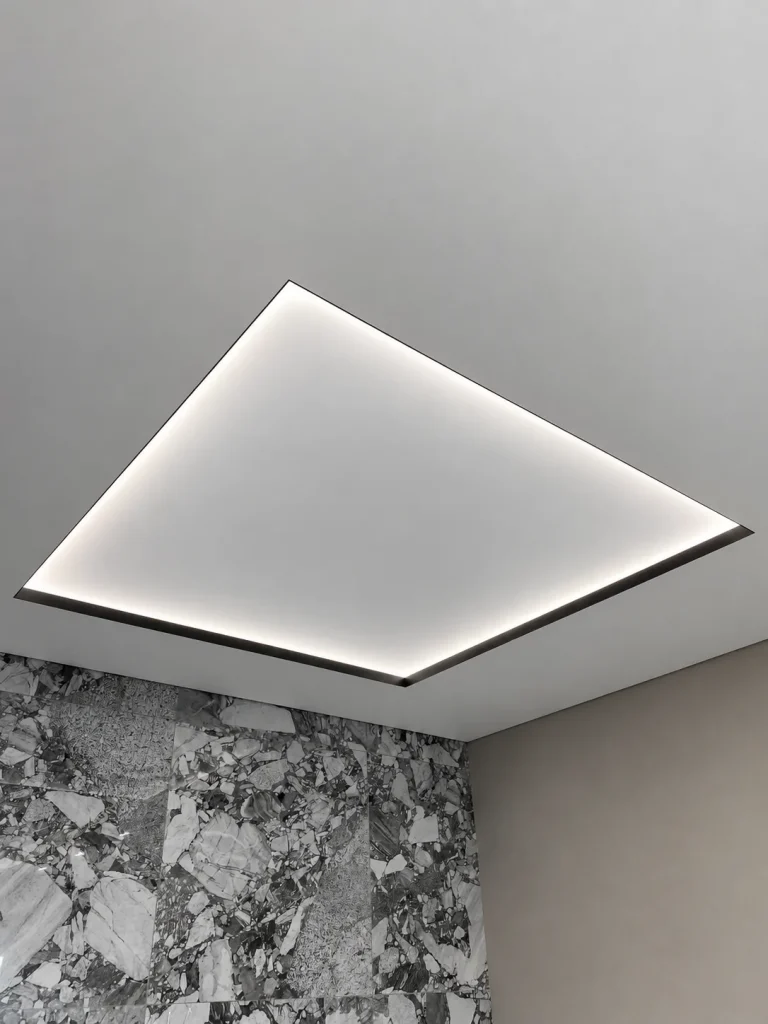
How it works
A fabric stretch ceiling is built from a polyester membrane with a polyurethane coating, fitted at room temperature without a heat gun. The finish reads as perfectly painted plasterboard with the micro-texture of an actual textile, but without the slight sheen that even matt PVC carries. Standard membrane width runs up to 5 metres without a seam.
Key Benefits
Heat-free installation, fitted at room temperature.
Natural matt finish with no reflectivity.
3 to 5 cm of headroom (5 to 7 cm with recessed downlights).
Certified textiles from Bauf, Teqtum and Brillum.
This is Modal Title
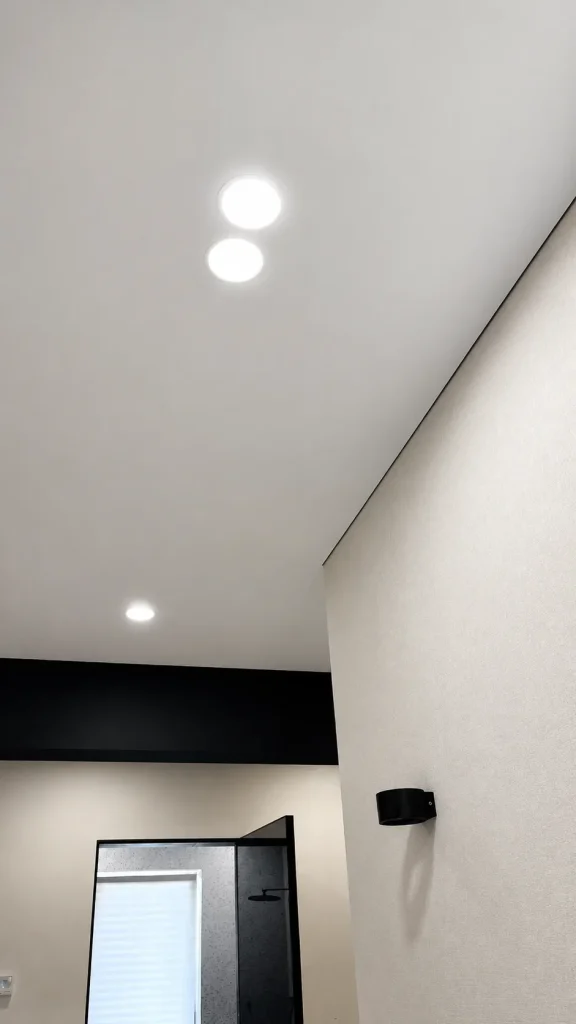
Where it works best
Fabric is the choice for rooms where material safety, acoustics or a natural matt texture matter most. The membrane also takes 2 to 3 repaints over its lifetime, so the interior can be refreshed without replacing the ceiling itself.
Key Benefits
Bedrooms and children's rooms: calm atmosphere, eco-conscious material.
Rooms for allergy sufferers: no volatile compounds, antistatic coating.
Home cinemas and recording studios: superior sound absorption.
Classical interiors with mouldings: matt texture suits period style.
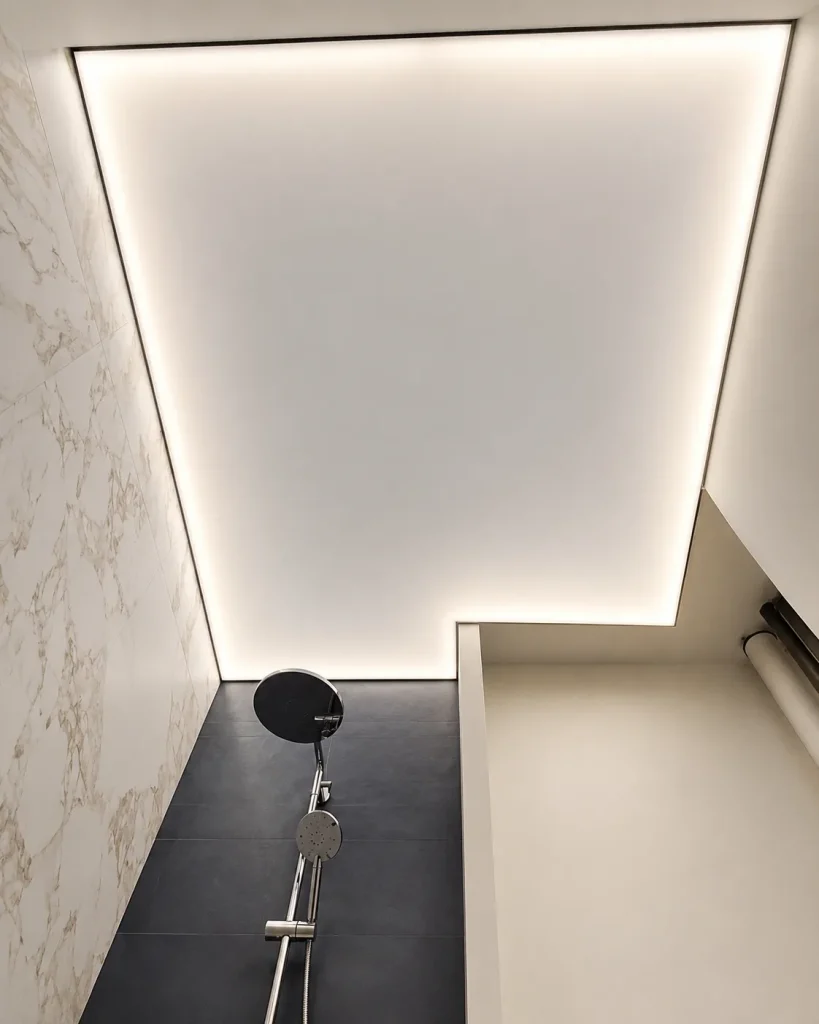
Lighting and acoustics
The matt fabric surface diffuses light evenly, with no glare or harsh highlights. A separate advantage is acoustics: fabric absorbs sound better than most ceiling finishes, noticeably in rooms with hard flooring and minimal soft furnishings. Vents, speakers and sensors are integrated via mounting platforms, with a reinforcing patch at each cut-out (fabric uses patches rather than the thermal rings used with PVC).
Key Benefits
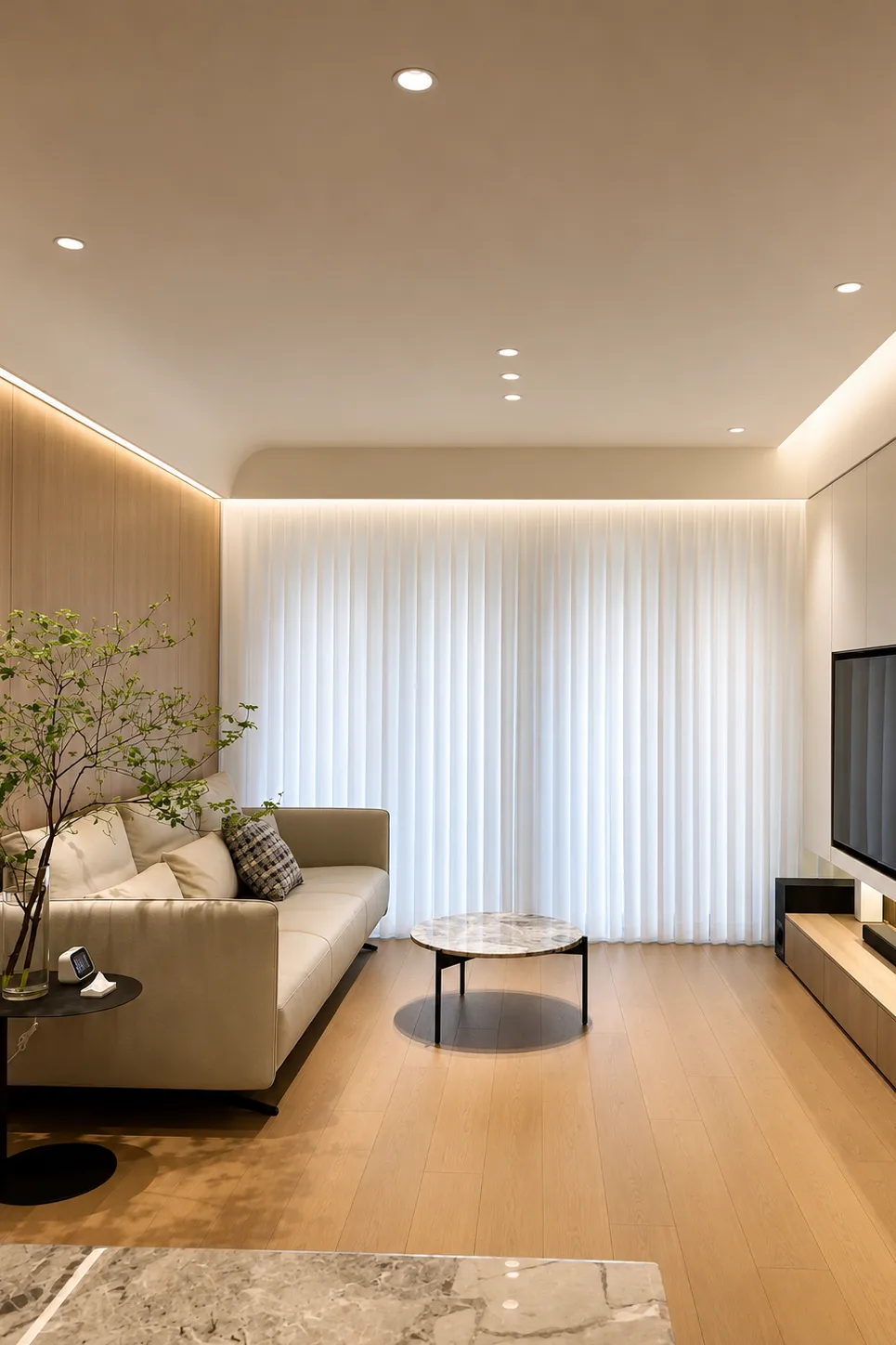
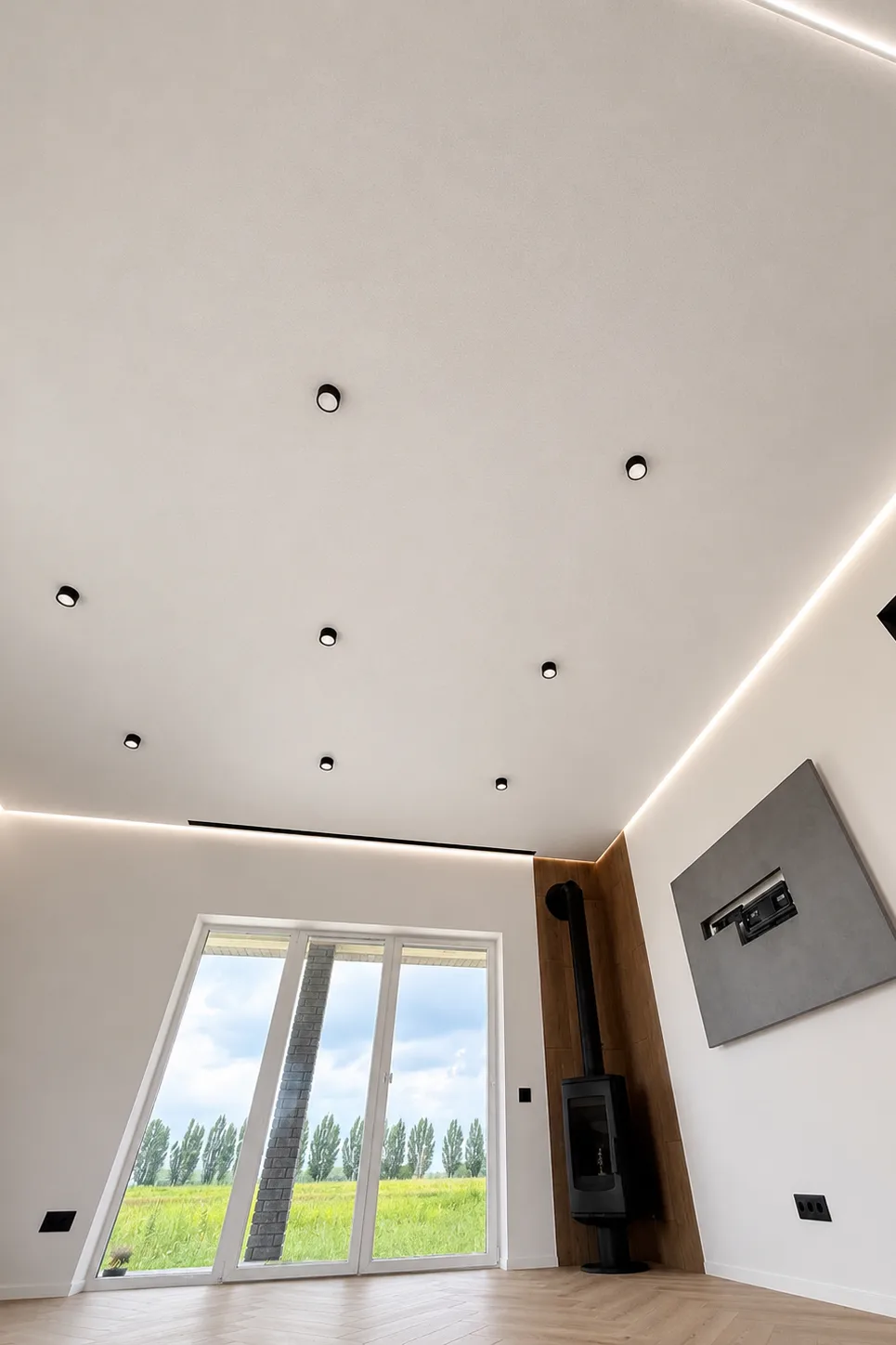
Recessed downlights: soft glow with no bright spots.
Chandeliers and pendant fittings: neat appearance with no visual doubling.
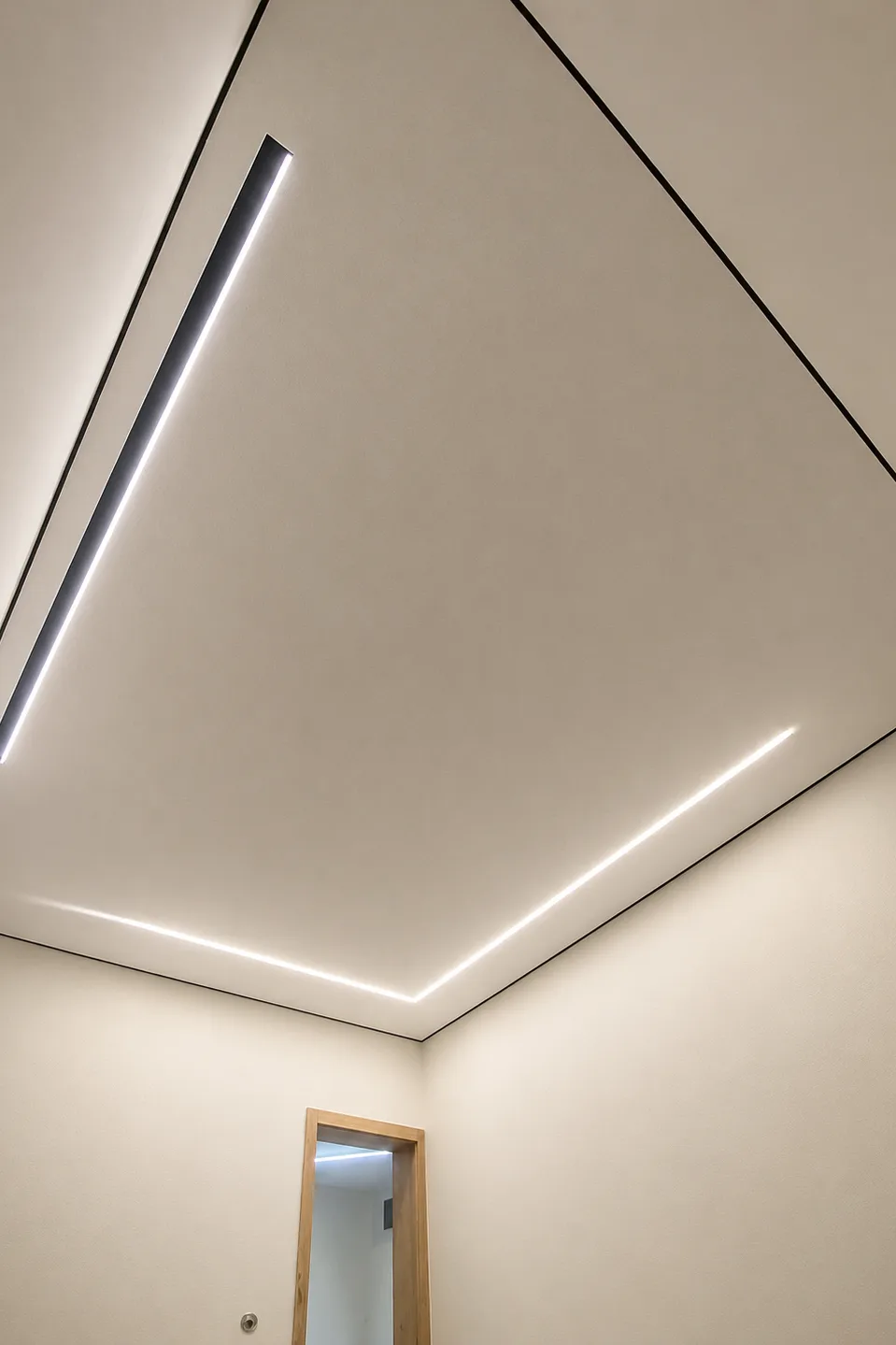
LED strips and linear profiles: ambient glow and clean lines.
Specialist acoustic membranes for cinemas and recording studios.
Fabric Stretch Ceiling FAQ
A fabric ceiling is a stretch system that uses a textile membrane instead of PVC film. The material is polyester with a polyurethane coating, with the feel of a dense fabric. The look - a matt surface that reads as a perfectly painted ceiling.
Three key differences. Firstly, a fabric ceiling is installed without heat, so there's no temperature exposure for the furniture or finishes. Secondly, fabric is tougher - much harder to damage by accident. Thirdly, fabric has a naturally matt texture, without the sheen that PVC carries.
3-5 cm below the original ceiling. With recessed downlights integrated, it's 5-7 cm. The same as a standard stretch ceiling.
In bedrooms, children's rooms and living rooms - anywhere material safety and a calm atmosphere matter. Also in home cinemas and media rooms: fabric absorbs sound better than PVC, so the room sounds cleaner, with less echo. In higher-end interiors, where you want the look of a perfectly painted ceiling without the risk of cracks, a fabric ceiling is often the first choice.
It's better not to fit fabric in bathrooms or kitchens - it doesn't repel water, and with constant exposure to steam or splashes, it loses its properties. If a pipe bursts upstairs, a fabric ceiling won't hold the water, and the walls and floor below will take the hit. For these rooms, we'd suggest PVC instead. Fabric also has a narrower colour range than PVC and costs more - so for standard projects without particular requirements, PVC is often the more practical choice.
Yes. The polyester membrane with a polyurethane coating doesn't release odours or harmful compounds into the air, and it's certified for residential use. Heat-free installation is another plus. That's why fabric ceilings are often recommended for children's rooms, bedrooms and rooms used by allergy sufferers.
Fabric absorbs sound better than PVC or plasterboard. A room with a fabric ceiling sounds less echoey, with less reverb - speech and music come through more clearly. For home cinemas, recording studios or simply larger living rooms, that's a real difference. If sound is genuinely critical, there are specialist acoustic fabric membranes with enhanced absorption properties.
Fabric membranes come in wide formats - up to 5 metres without a seam. For standard rooms, no seam is needed at all. In larger halls wider than 5 metres, a seam may be needed - but fabric seams sit more discreetly than PVC ones; they're practically invisible under normal lighting.
3-Step Process
Our Process, Made Simple
Each project is led by a single specialist from the first survey to the final handover. Clear timeline, transparent pricing and a clean, dust-free installation.
1. Survey & Samples
Free site visit, room and lighting check, physical membrane samples brought on site.
2. Design & Quote
Colour, configuration and lighting layout, with transparent itemised pricing.
3. Install & Finish
Measurement, manufacturing and clean installation by trained team, typically within 1 to 3 days.
Fabric Stretch Ceilings: fabric stretch ceilings for eco-conscious interiors
A fabric stretch ceiling is built from a polyester membrane with a polyurethane coating, with the look and feel of a dense textile. Unlike PVC, fabric is installed without heat, has a natural matt texture and a higher resistance to accidental damage. It’s the right choice for rooms where material safety matters and where you want the look of a perfectly painted ceiling without the slight sheen that even matt PVC has.
At Ceiling Design Lux, fabric ceilings are a separate offering for clients who value natural materials and a calm, understated aesthetic. We work with membranes from Bauf, Teqtum and Brillum – certified textiles that meet UK safety standards for residential interiors. Every membrane is cut to measure for the specific room.
How fabric compares with PVC
Three key differences that come into play when you’re choosing:
- Heat-free installation. A fabric membrane doesn’t need a heat gun – it’s fitted at room temperature. Furniture, finishes and electronics aren’t exposed to any temperature change during the work. For rooms with sensitive items – antiques, musical instruments, expensive textiles – that’s a serious consideration.
- Natural matt texture. Fabric doesn’t shine – it reads as a perfectly painted surface with the micro-texture of an actual textile. It’s a different aesthetic from PVC, where even matt finishes carry a slight sheen.
- Higher resilience. Fabric is much harder to damage by accident – it doesn’t tear from a glancing blow with a soft object the way PVC sometimes can.
The structure takes up 3-5 cm of headroom, or 5-7 cm with recessed downlights integrated. The standard membrane width goes up to 5 metres without a seam, which means a large area can be covered as a single uninterrupted panel.
Where a fabric ceiling works best
Fabric is the choice for rooms where material requirements or acoustics are a priority:
- Bedrooms – the natural matt texture creates a calm atmosphere with no reflectivity at all
- Children’s rooms – an eco-conscious material with no off-gassing, safe for extended exposure
- Rooms for allergy sufferers – no volatile compounds in the makeup, and the antistatic coating doesn’t attract dust
- Home cinemas and media rooms – fabric absorbs sound better than PVC or plasterboard, so the room sounds cleaner
- Recording studios and acoustically demanding workspaces – specialist acoustic fabric membranes are available with enhanced absorption properties
- Classical interiors with mouldings and traditional detailing – the matt texture sits naturally with period style, where gloss would feel out of place
A separate advantage of fabric is repaintability. The membrane takes 2-3 repaints over its lifetime, so a few years down the line, you can refresh the interior without replacing the ceiling itself.
When another option might suit you better
A fabric ceiling isn’t a one-size-fits-all solution, and in some cases PVC will be the more practical choice:
- in bathrooms and kitchens, fabric isn’t the right call – it doesn’t repel water, and with constant exposure to steam or splashes, it loses its properties. If a pipe bursts upstairs, a fabric ceiling won’t hold the water the way PVC does. For wet rooms we’d suggest Glossy Stretch Ceiling or Satin Stretch Ceiling
- if you’re after a strong visual effect (mirror reflection, deep gloss) – fabric can’t deliver that, given its naturally matt finish
- if budget is tight – fabric membranes cost more than PVC for comparable installations; for standard projects without particular requirements, PVC is often the more practical option
- if the broadest possible colour palette is a must – fabric has fewer colour variants than PVC
When we come out for the survey, we’ll talk through what matters most to you – eco-conscious materials and texture, or practicality and a wider palette. We’ll give you an honest answer on which option is the optimal fit for your particular case.
Lighting and acoustics
The matt fabric surface diffuses light evenly, with no glare or harsh highlights. That makes it especially comfortable for rooms with strong lighting:
- Recessed downlights – soft glow with no bright spots
- Chandeliers – look neat without any visual doubling
- LED strips – form a calm ambient glow
- Linear profiles – give clean lines of light
The acoustic side deserves a separate mention. A fabric membrane absorbs sound better than most ceiling finishes. In larger rooms with hard flooring and minimal soft furnishings – the typical setup in modern apartments with parquet and glass surfaces – the difference is noticeable: less echo, with speech and music sounding cleaner. For acoustically critical rooms – home cinemas and recording studios – specialist acoustic fabric membranes are available with enhanced absorption characteristics.
Built-in fittings – recessed downlights, vents, speakers, smoke alarms, cameras – are integrated into the fabric membrane via mounting platforms fixed to the original ceiling. At the cut-out point, a reinforcing patch is fitted (with fabric membranes, reinforcing patches are used rather than thermal rings as with PVC).
Care and lifespan
A fabric ceiling lasts 15-25 years with proper care, sometimes longer. The fabric doesn’t yellow over time, doesn’t deform and doesn’t stretch out. The official guarantee runs up to 10 years.
Day-to-day care is simpler than you might expect. The antistatic coating doesn’t attract dust, so for regular maintenance a soft dry cloth or a vacuum cleaner with a soft brush attachment is enough. Stains can be carefully blotted with water and a mild detergent – but without abrasive cleaners and without scrubbing too hard, to avoid damaging the surface.
Ready to talk through your project?
Book a free survey – we’ll come out, take a look at the room from an acoustic and lighting standpoint, show you samples of Bauf, Teqtum and Brillum fabric membranes, and talk through colour and configuration. A fabric ceiling is a specialised solution, so on site it quickly becomes clear whether it’s the right fit for your space, or whether a PVC option would be the more practical call.
The survey and consultation are free, with no obligation to commit. You’ll find our phone number and contact form on the contact page.