
Services
Carve Stretch Ceilings
Carved stretch ceilings with laser-cut patterns and integrated backlighting, turning the ceiling into a standalone design feature.
How it works
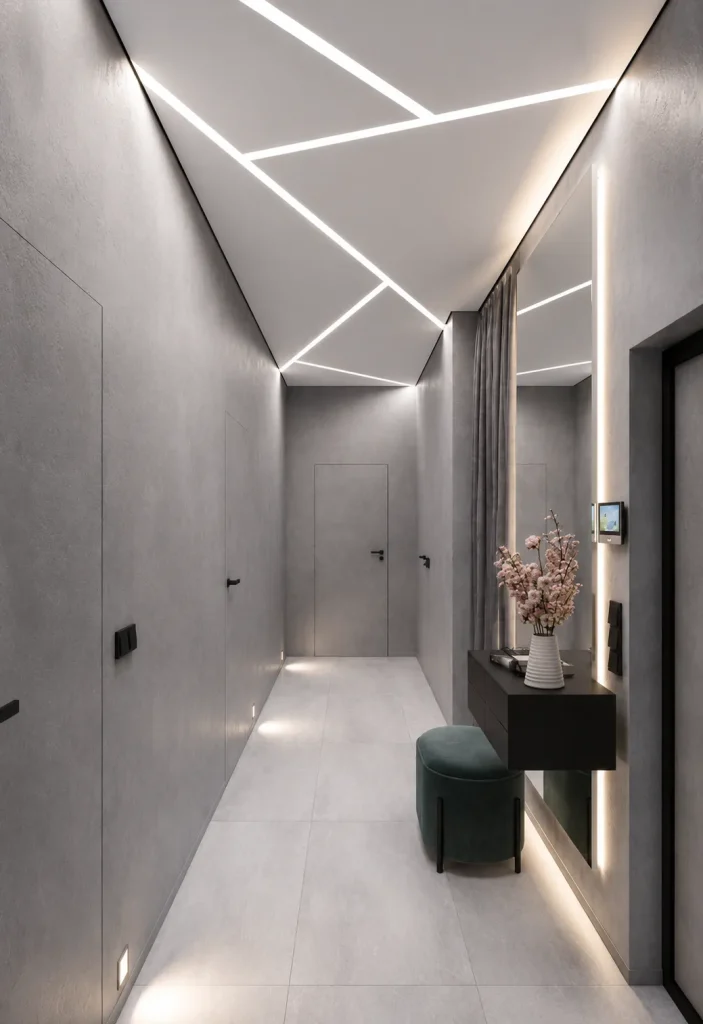
A carved ceiling is a two-layer structure mounted on a specialist 3D profile. The upper membrane is the base layer with backlighting fitted behind it; the lower membrane carries laser-cut patterns. Light passes through the cut-outs to create a layered effect, giving the ceiling two modes: a daytime look with the pattern as decorative graphics, and an evening one as a luminous composition.
Key Benefits
Two-layer structure with a 5 to 10 cm gap between membranes.
8 to 15 cm of total headroom (room height 2.6 m or above).
Laser-cut patterns with sealed edges that stay crisp over time.
Certified membranes from Bauf, Teqtum and Brillum.
Request a Free Quote
Patterns we can produce
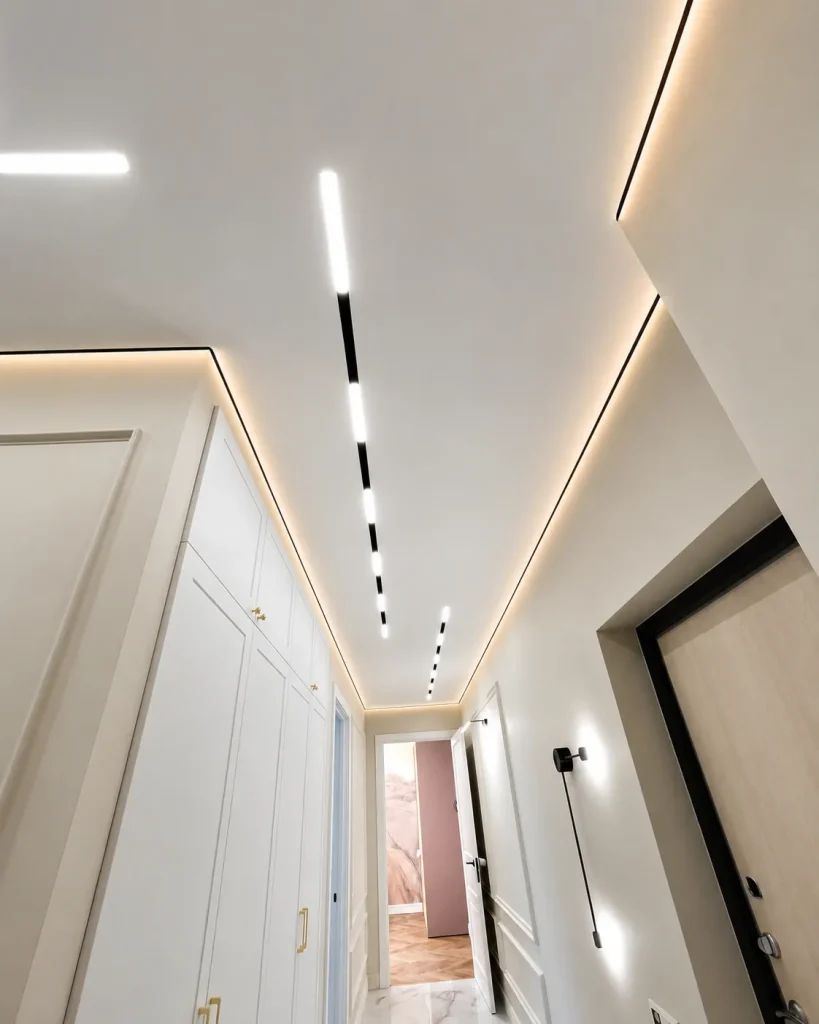
Carving is one of the most flexible design options. The laser cuts almost any graphic, chosen from our catalogue or worked from a sketch you (or your interior designer) bring along. Edges are sealed during cutting, so the pattern stays sharp throughout the ceiling's lifetime.
Key Benefits
Geometric forms: circles, lines, waves, repeating modules.
Botanical and abstract patterns, from baroque to Japanese-inspired.
Logos and bespoke artwork for restaurants, boutiques and showrooms.
"Starry sky" with fibre-optic backlighting.
Backlighting
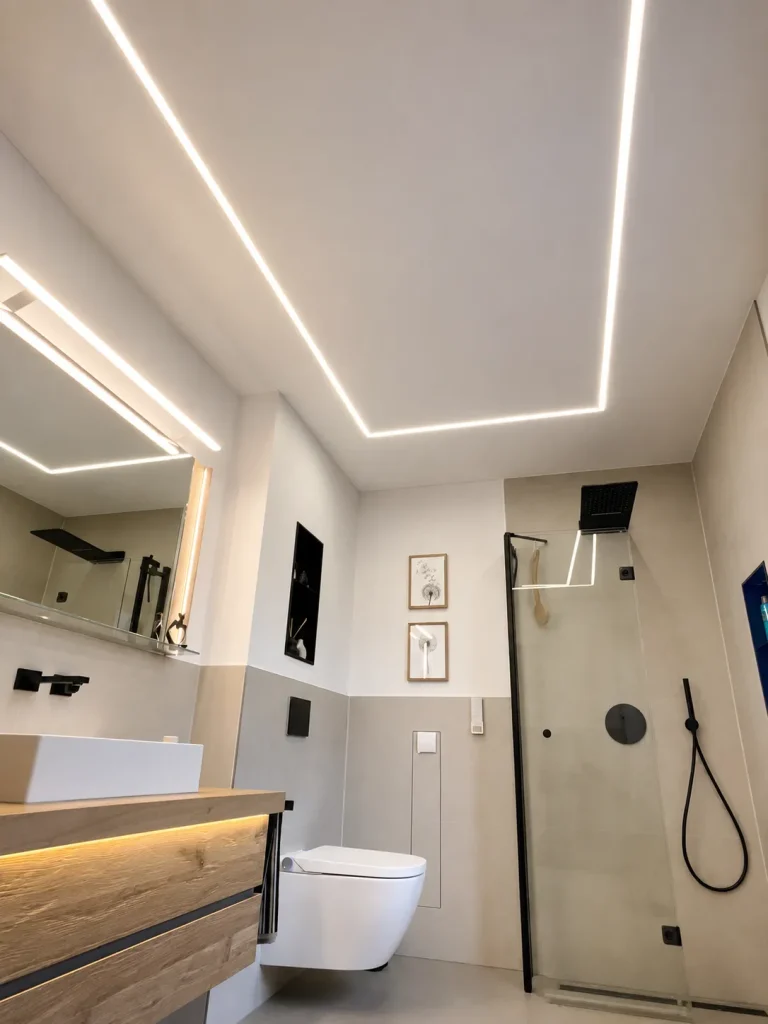
Without backlighting, a carved pattern loses most of its impact, so choosing the type of light is just as important as choosing the pattern itself. The LED backlighting fitted behind the upper membrane lasts 8 to 12 years and can be replaced without taking the whole ceiling down.
Key Benefits
Continuous soft glow: even backdrop, suits classical patterns.
RGB backlighting with remote or smartphone control.
Gradient: smooth colour transition from edge to centre.
Fibre optics for "starry sky" or dynamic colour-changing scenes.
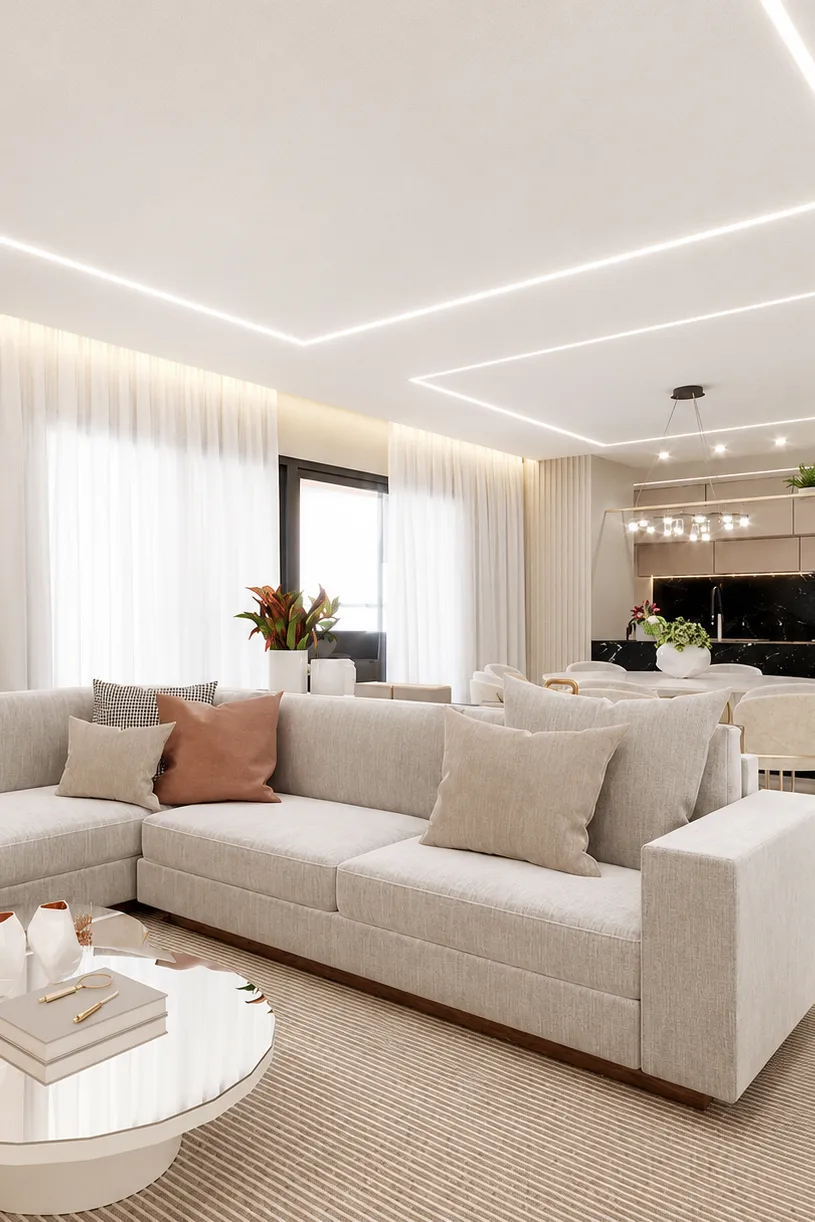
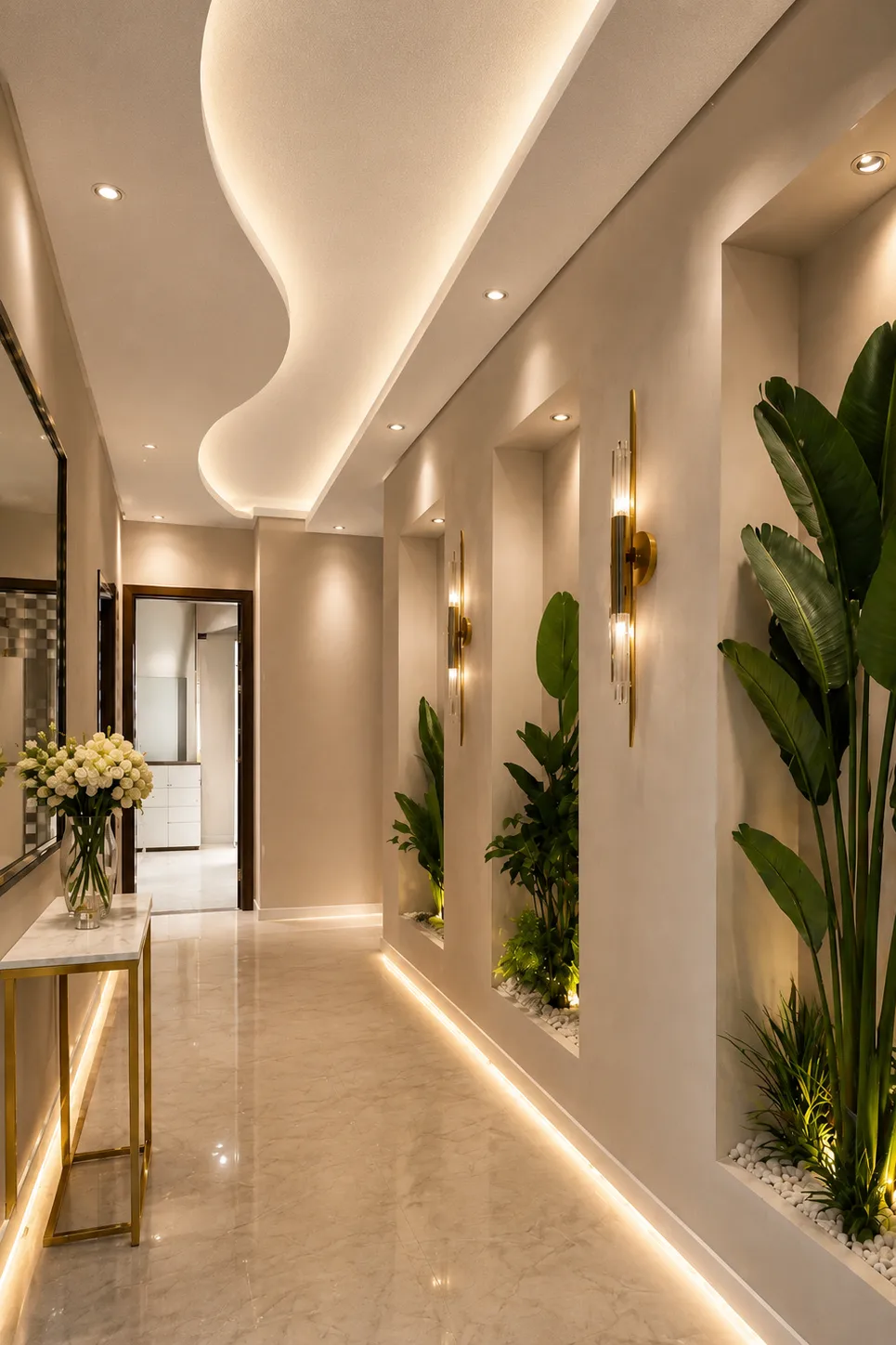
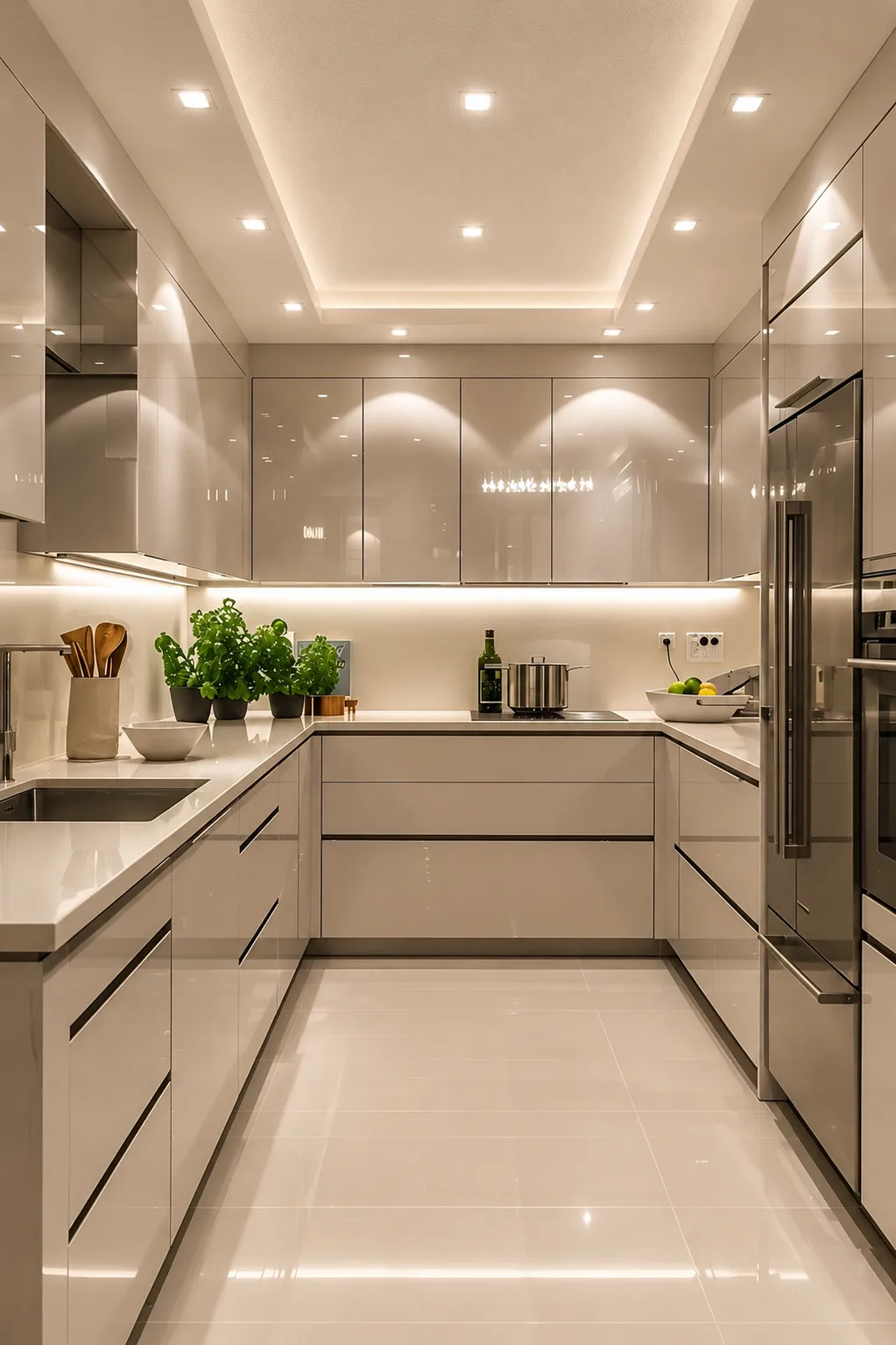
FAQ
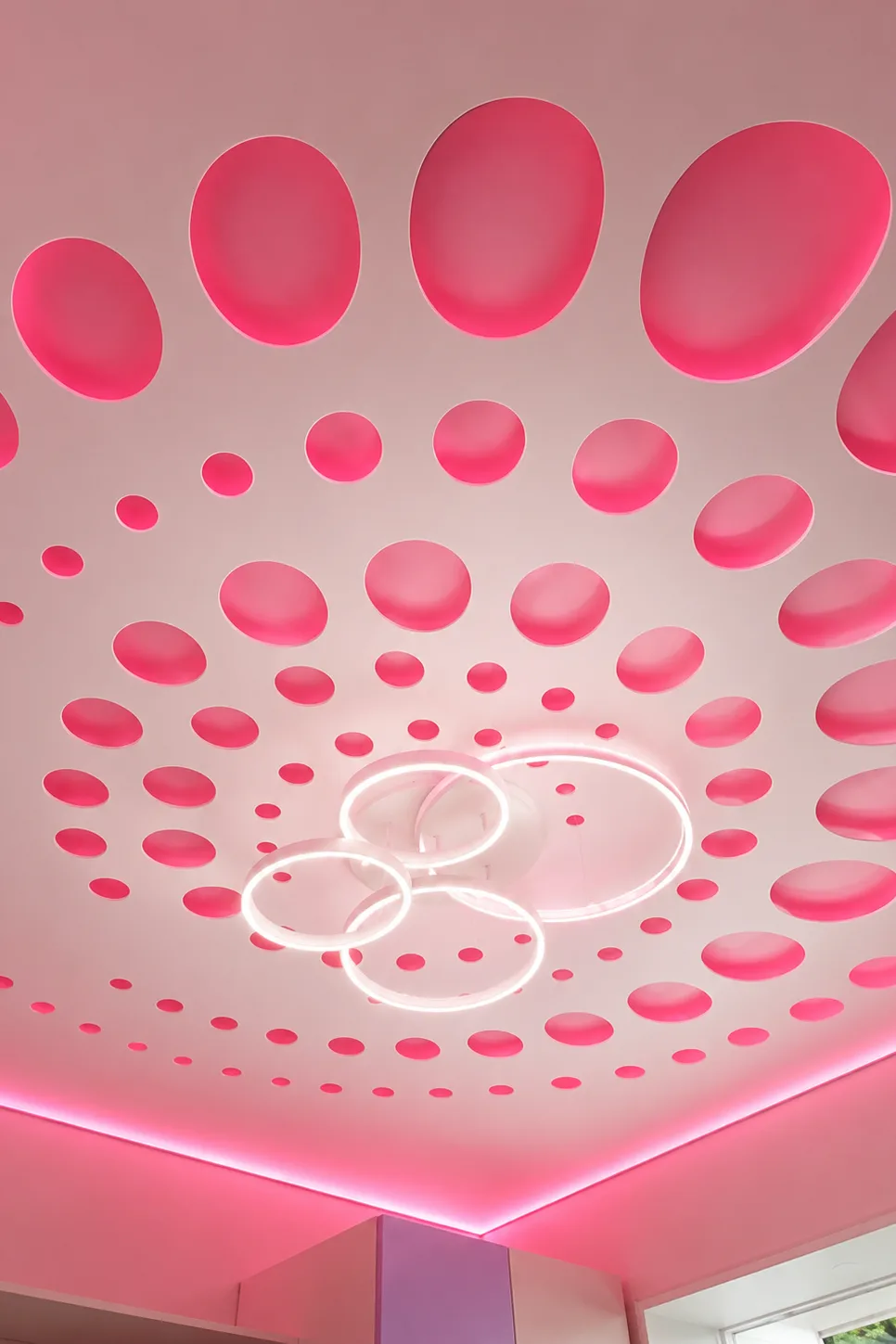
It's a two-layer structure where the lower membrane has decorative patterns cut into it by laser, with an upper membrane and backlighting behind it. Light passes through the patterns and creates a layered light effect on the ceiling. It looks like a designer art piece - something you simply can't get with standard painting or printing.
Almost anything. The most popular options:
- geometric forms (circles, lines, waves, squares);
- botanical patterns - classical or stylised;
- abstract design compositions;
- logos - for commercial spaces (restaurants, boutiques, offices);
- a "starry sky" effect, with tiny points scattered across the ceiling.
At the consultation, we go through our catalogue of ready-made templates and talk through bespoke artwork for your interior.
More than a single-level one, since the structure is built in two layers. A 5-10 cm gap is needed between the upper and lower membranes for the backlighting. In total, the structure takes up 8-15 cm below the original ceiling, depending on the type of backlighting chosen.
In large living rooms, luxury bedrooms, home cinemas and hallways where decor takes centre stage. It's also popular in commercial spaces: restaurants, bars, beauty salons, boutiques and showrooms - anywhere the ceiling is meant to act as a design feature in its own right. In smaller rooms, carved ceilings are still done, but with simpler patterns, so as not to overload the space.
In minimalist interiors where the whole aesthetic is built around restraint and clean lines - carving feels excessive there. In rooms with low ceilings (below 2.6 m) - the two-layer structure takes up critical headroom. And if budget is tight - a carved ceiling costs significantly more than a standard one, given the two-layer system, the laser-cutting and the additional backlighting.
LED lighting is fitted behind the upper membrane - strips, panels or point sources, depending on the design. The light passes through the cut-outs in the lower membrane and lifts the pattern. The most popular options:
- continuous soft glow (LED panels create an even backdrop);
- RGB backlighting with colour change - controlled by remote or smartphone;
- gradient effect - smooth transition from edge to centre;
- "starry sky" with twinkling points, using fibre optics or micro-LEDs.
Yes - that's one of the main advantages of the technology. We work from sketches supplied by the client or by an interior designer. The file is prepared in vector format, and the laser then cuts the pattern exactly to the artwork. For commercial sites, we often produce ceilings with the brand logo at the centre - as part of the branded space.
Yes - and it adds a sense of depth. For instance, a white matt lower layer with a vivid blue upper layer creates a "sky through lacework" effect. Contrasting combinations bring out the geometry of the pattern. At the consultation, we help you pick a combination that suits your interior.
3-Step Process
Our Process, Made Simple
Each project is led by a single specialist from the first survey to the final handover. Clear timeline, transparent pricing and a clean, dust-free installation.
1. Survey & Samples
Free site visit, room and lighting check, physical membrane samples brought on site.
2. Design & Quote
Colour, configuration and lighting layout, with transparent itemised pricing.
3. Install & Finish
Measurement, manufacturing and clean installation by trained team, typically within 1 to 3 days.
Carve Stretch Ceilings: carved stretch ceilings with decorative patterns and backlighting
A carved stretch ceiling is a two-layer structure where the lower membrane carries decorative cut-outs in the shape of patterns, and the upper membrane with built-in backlighting works as a luminous backdrop. Light passes through the patterns and creates a layered light effect on the ceiling. It’s a solution for clients who want to turn the ceiling into a standalone design feature – an art piece in its own right, rather than just a background surface.
At Ceiling Design Lux, we produce carved ceilings to order – the pattern is matched to the interior style, and the design can be chosen from our catalogue or worked from the client’s own sketch. We work with membranes from Bauf, Teqtum and Brillum – material quality is critical for carving, since the edges of the cut-outs need to stay crisp throughout the ceiling’s lifetime.
How a carved ceiling works
The structure is built from two layers of membrane, mounted on a specialist 3D profile. The upper membrane is the base layer, with backlighting fitted behind it. The lower membrane carries the patterns, cut by laser to millimetre precision. Between the two layers, a 5-10 cm gap is kept for even light distribution.
When the backlighting is on, light passes through the cut-outs in the lower membrane and creates a layered light effect. With the lighting off, the pattern reads as decorative graphics against a matt or gloss background. So the ceiling has two modes – a daytime look and an evening one, each with its own aesthetic.
In total, a carved structure takes up 8-15 cm of headroom depending on the type of backlighting used. That’s more than a single-level ceiling, which makes the room’s height a critical factor when choosing this kind of solution.
Patterns we can produce
Carving is one of the most flexible options on the design side. The laser can cut almost any kind of graphic:
- Geometric forms – circles, lines, waves, squares, repeating modules
- Botanical patterns – classical or stylised, from baroque motifs through to Japanese-inspired design
- Abstract design compositions – bespoke graphics for a specific interior
- Logos – for commercial spaces: restaurants, boutiques, offices, showrooms
- “Starry sky” – tiny points of light scattered across the ceiling, with fibre-optic backlighting for a night-sky effect
- The client’s own sketch – the file is prepared by a designer in vector format, and the laser cuts to the artwork
At the consultation, we go through our catalogue of ready-made templates and talk through bespoke options. If you’re working with an interior designer, we coordinate the artwork with their overall concept for the space.
Backlighting – the key element
Without backlighting, a carved pattern loses most of its impact – the light is what creates the layered graphic on the ceiling. Choosing the type of backlighting at the design stage is just as important as choosing the pattern itself:
- Continuous soft glow – LED panels behind the upper membrane create an even backdrop. Suits classical patterns and standard setups
- RGB backlighting – colour change via remote or smartphone. Lets you adjust the mood to suit the moment – a party, a romantic dinner, a quiet evening in
- Gradient – smooth colour transition from edge to centre. Works as an accent feature for artistic compositions
- Fibre optics – fine points of light, twinkling like stars. The standard solution for a “starry sky” in bedrooms and children’s rooms
- Dynamic scenes – shifting colour, intensity and effects. Suits entertainment spaces, restaurants, lounge areas
The LED backlighting fitted behind the upper membrane lasts 8-12 years and can be replaced without taking the whole ceiling down.
Where a carved ceiling works best
It’s a solution for rooms where the ceiling is intended as a standalone design feature:
- Large living rooms and luxury bedrooms – the centrepiece of the interior
- Home cinemas and media rooms – a “starry sky” or dynamic backlighting builds the atmosphere
- Hallways and entrance corridors – the pattern transforms a utilitarian space into something with character
- Modern restaurants, bars, cafés – the ceiling becomes part of the venue’s brand
- Boutiques and showrooms – a logo or signature motif at the heart of the space
- Beauty salons, spas, lounge areas – layered backlighting sets the atmosphere
- Public spaces – galleries, coworking venues, lecture halls – a memorable architectural feature
Carved ceilings work particularly well as part of a multi-level structure – the pattern on one of the levels becomes the visual focus of the whole room.
When another option might suit you better
A carved ceiling is a specialist solution, and it isn’t always the right call:
- in minimalist interiors, where the whole aesthetic is built around clean lines – Shadow Stretch Ceiling or Gapless Stretch Ceiling work better here, since the geometry itself becomes the feature
- in rooms with low ceilings (below 2.6 m), the two-layer structure takes up critical headroom and the space ends up feeling cramped
- if budget is tight – a carved ceiling costs significantly more than a single-level installation, given the two-layer structure, the laser-cutting of the pattern and the additional backlighting
- in classical interiors with traditional plaster mouldings, carving can clash with the period detailing if the patterns aren’t chosen with the style in mind
When we come out for the survey, we talk through the interior style, the room height and the lighting concept – this determines whether a carved ceiling will work as a strong feature, or whether it’ll overwhelm the space instead.
The technical side of installation
A carved ceiling is one of the most complex types in terms of both production and fitting. Laser-cutting the patterns is a separate stage that takes longer than standard membrane cutting. The fitting itself takes 2-3 days, against 1-3 days for a standard ceiling.
The edges of the cut-outs are sealed during the laser-cutting process – this stops the membrane from tearing under tension and keeps the pattern lines crisp throughout the ceiling’s lifetime. It’s an important technical detail that sets a properly carved ceiling apart from amateur work with a knife, where the edges fray over time.
Built-in fittings – recessed downlights, vents, sensors – are integrated into the lower membrane via mounting platforms fixed to the original ceiling, with a thermal ring protecting the PVC from heat. The backlighting behind the upper membrane is fitted at the structure preparation stage and runs on its own dedicated electrical circuit.
Ready to talk through your project?
Book a free survey – we’ll come out, talk through your ideas, show you the pattern catalogue and samples of Bauf, Teqtum and Brillum membranes, and choose the type of backlighting together to suit your interior style. If you have your own sketch, or you’re working with a designer, bring the file along – we’ll go through the technical execution together.
The survey and consultation are free, with no obligation to commit. You’ll find our phone number and contact form on the contact page.