
Services
Mirror Stretch Ceilings
Mirror stretch ceilings with around 95% reflectivity that visually double the height and the sense of space.
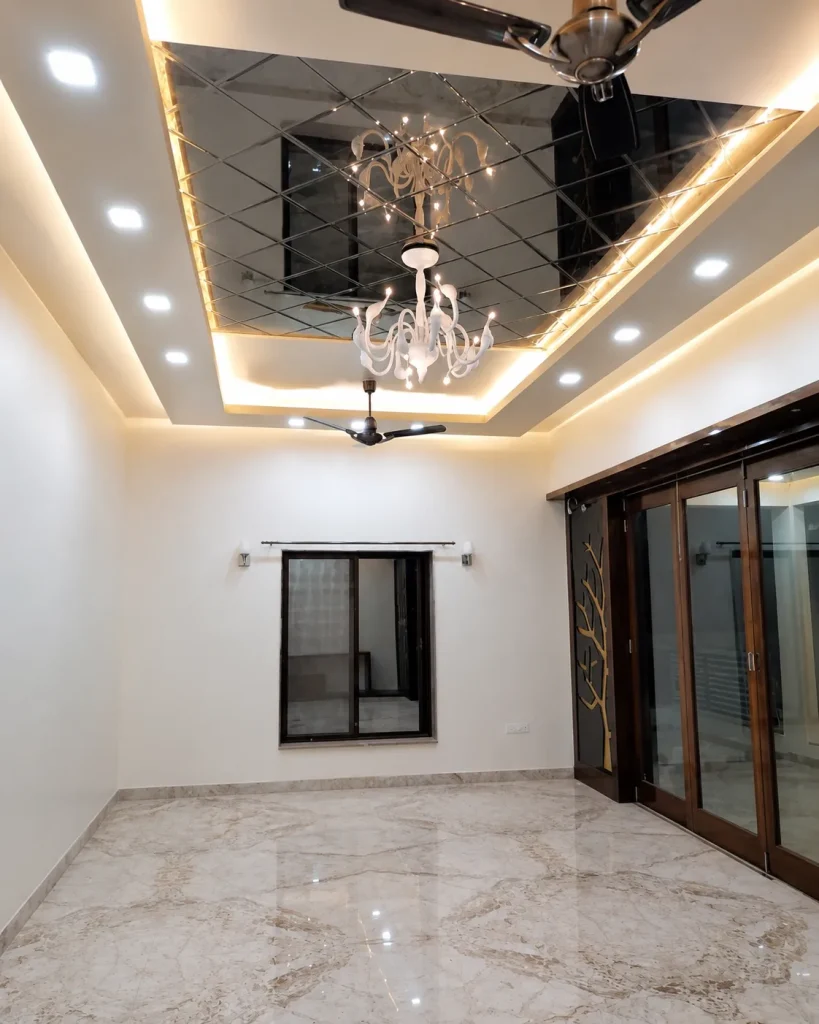
How it works
A mirror stretch ceiling uses a PVC membrane treated with a special reflective layer that delivers around 95% reflectivity, practically indistinguishable from a glass mirror. The visual effect is a doubling of the space: a 2.7 m room reads as a 5.4 m tall space, with no changes to the layout. The structure itself takes up the same headroom as a standard ceiling.
Key Benefits
PVC membrane with around 95% reflectivity (mirror-like clarity).
Visually doubles room height and the sense of space.
3 to 5 cm of headroom (5 to 7 cm with recessed downlights).
Certified membranes from Bauf, Teqtum and Brillum.
Request a Free Quote
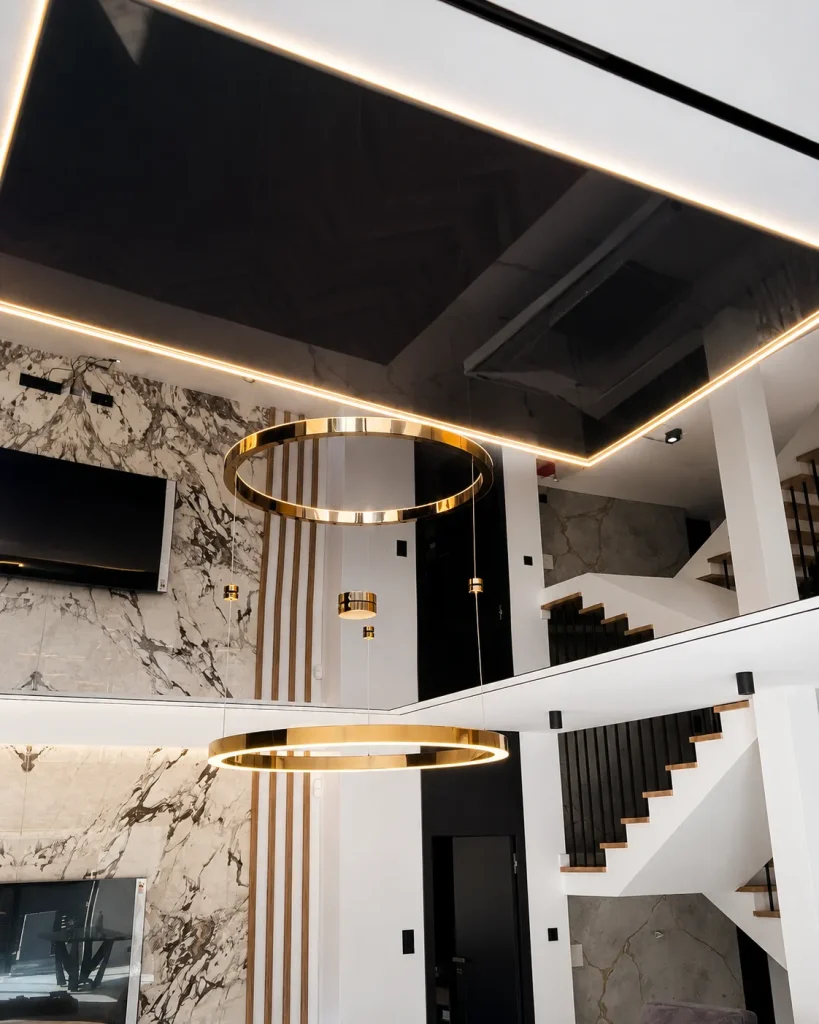
Where it works best
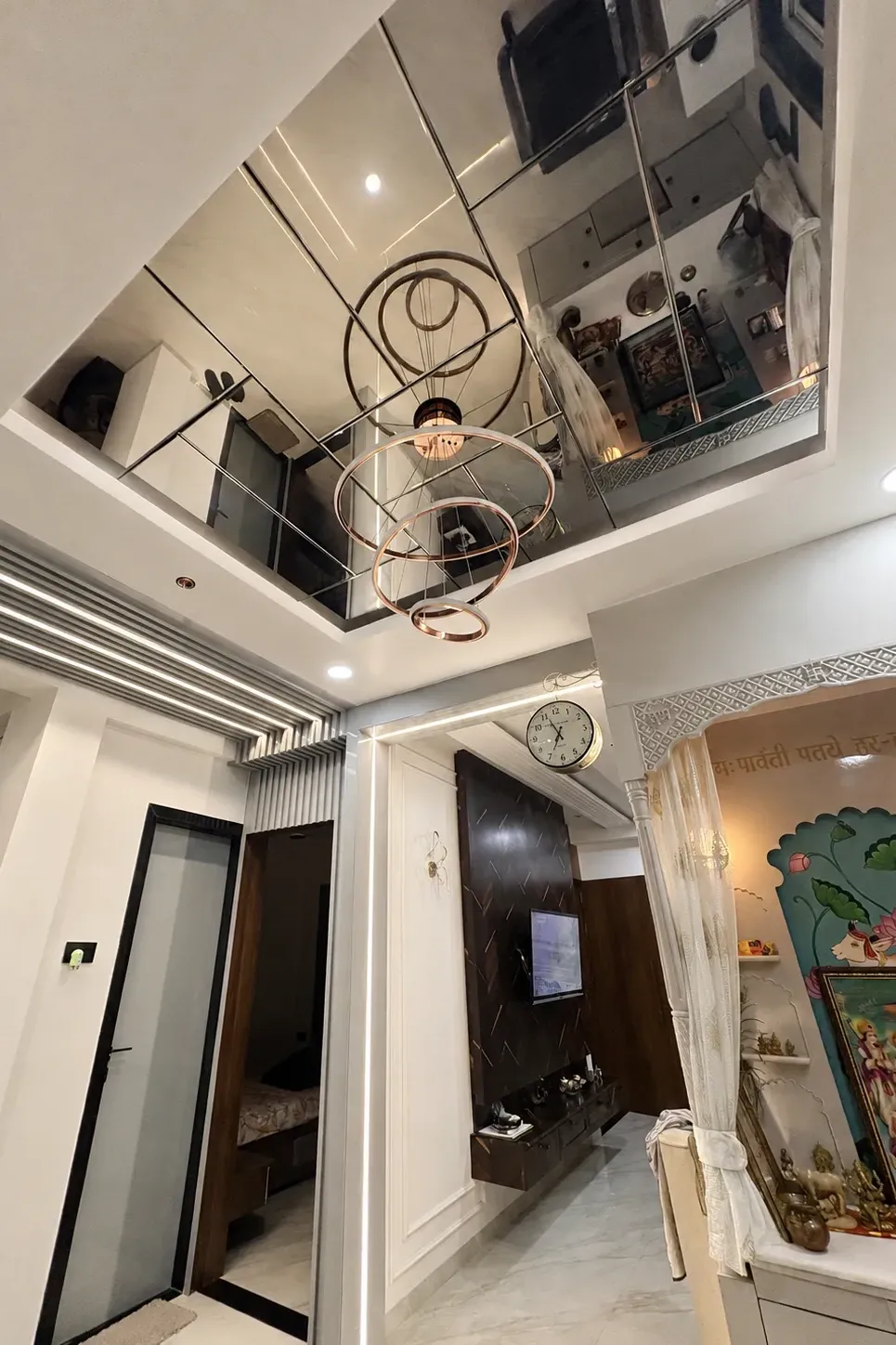
Mirror finishes are most effective in compact spaces where the layout doesn't allow physical expansion, or as a feature element in larger rooms. A mirrored island within a multi-level structure delivers the doubling effect without overwhelming the space.
Key Benefits
Smaller bathrooms: doubled height, more light, humidity-friendly.
Hallways and entrance corridors: narrow spaces feel wider.
Spa areas, beauty salons and treatment rooms.
Restaurants, bars and showrooms: as a feature above a specific zone.
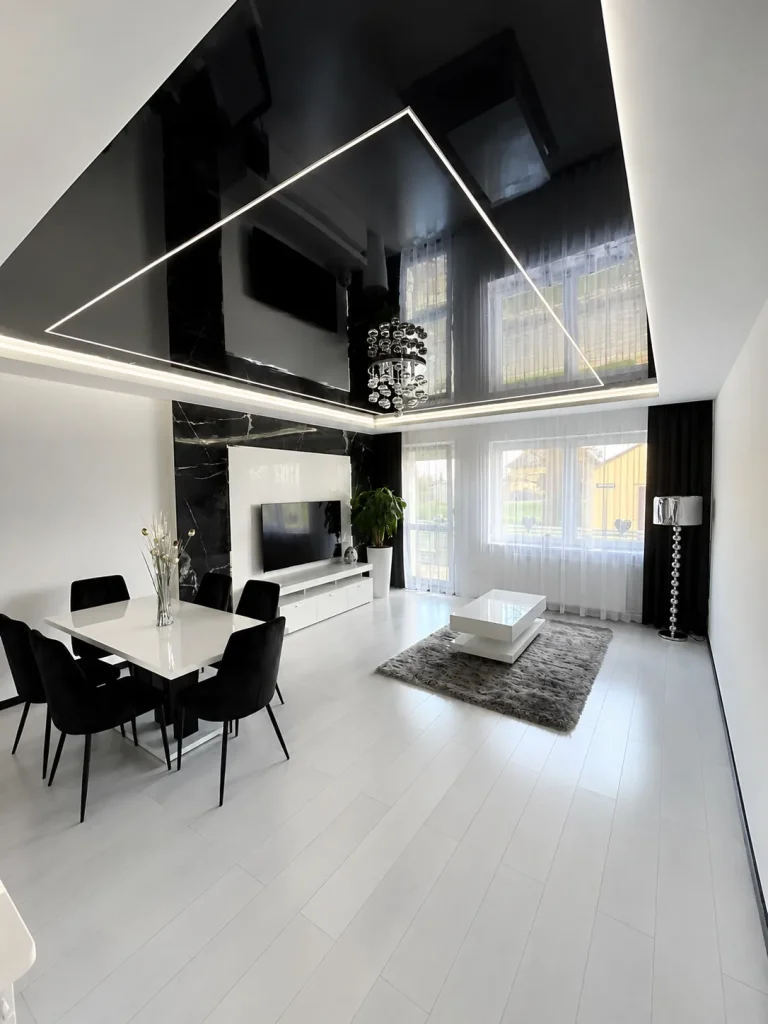
Lighting and built-in fittings
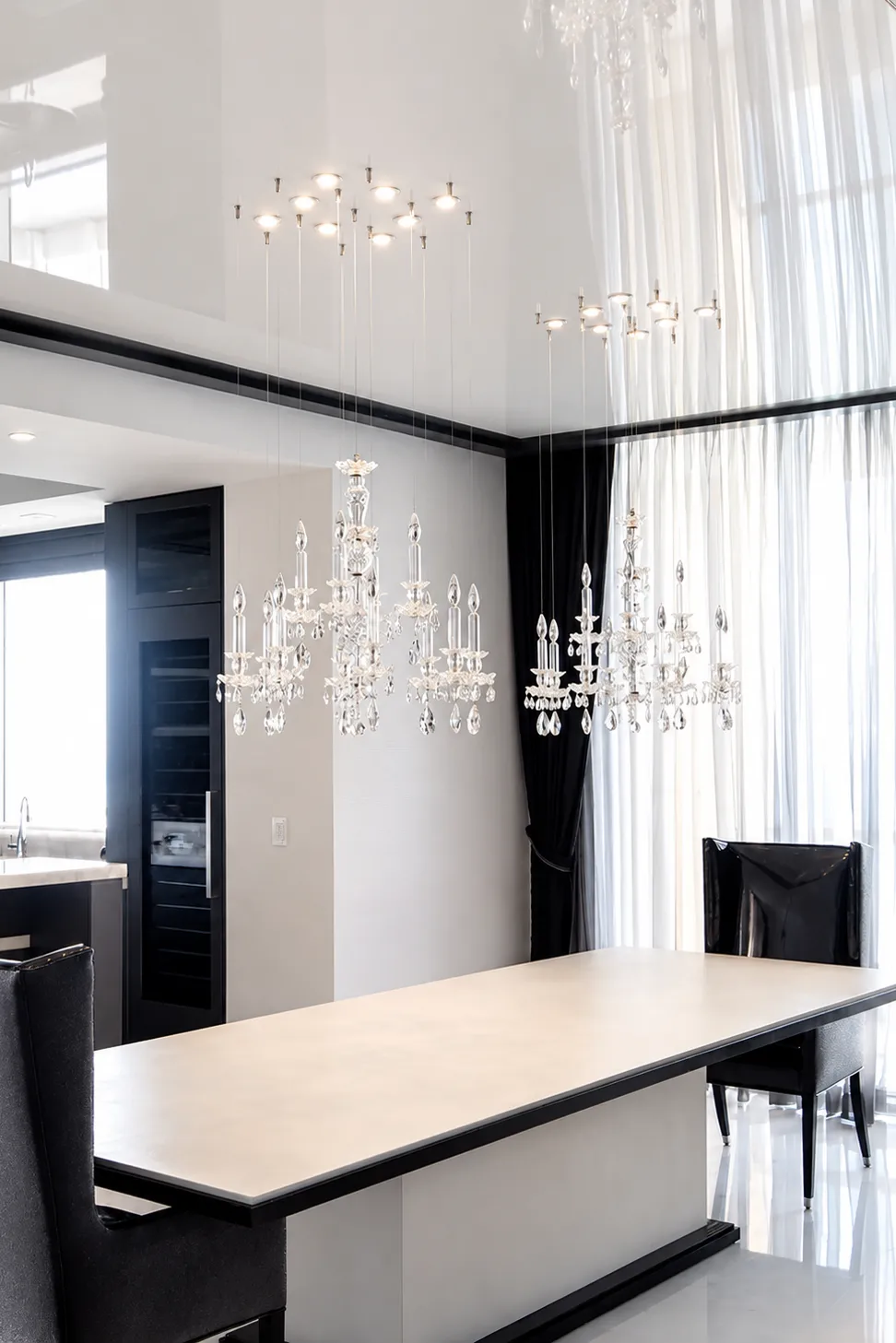
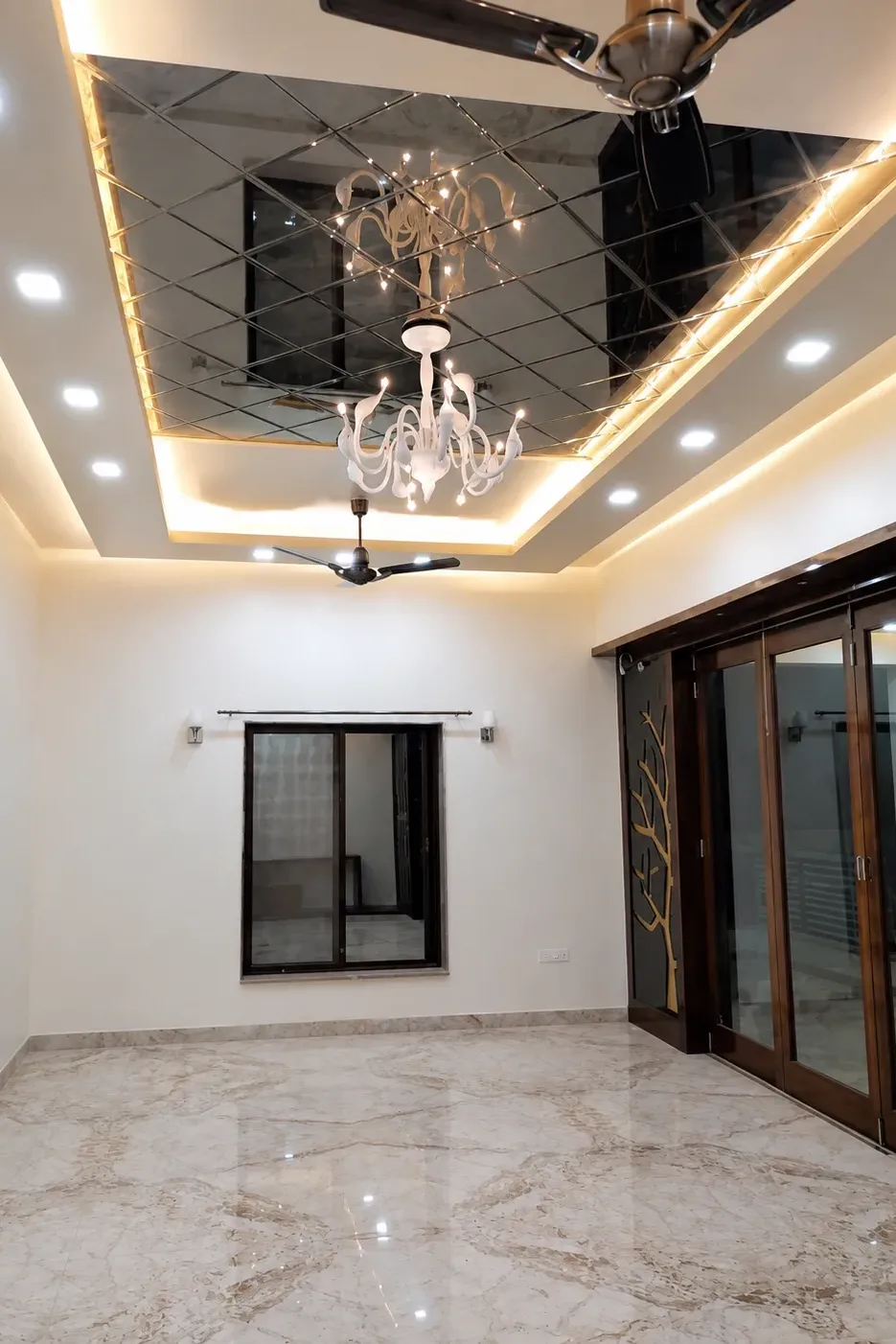
A mirror ceiling amplifies any light source: every fitting is visually doubled in the reflection, which effectively boosts the light in the room. Seamless installation matters here, since any join breaks the reflection. Vents, speakers, sensors and downlights are integrated via mounting platforms with a thermal ring at each cut-out.
Key Benefits
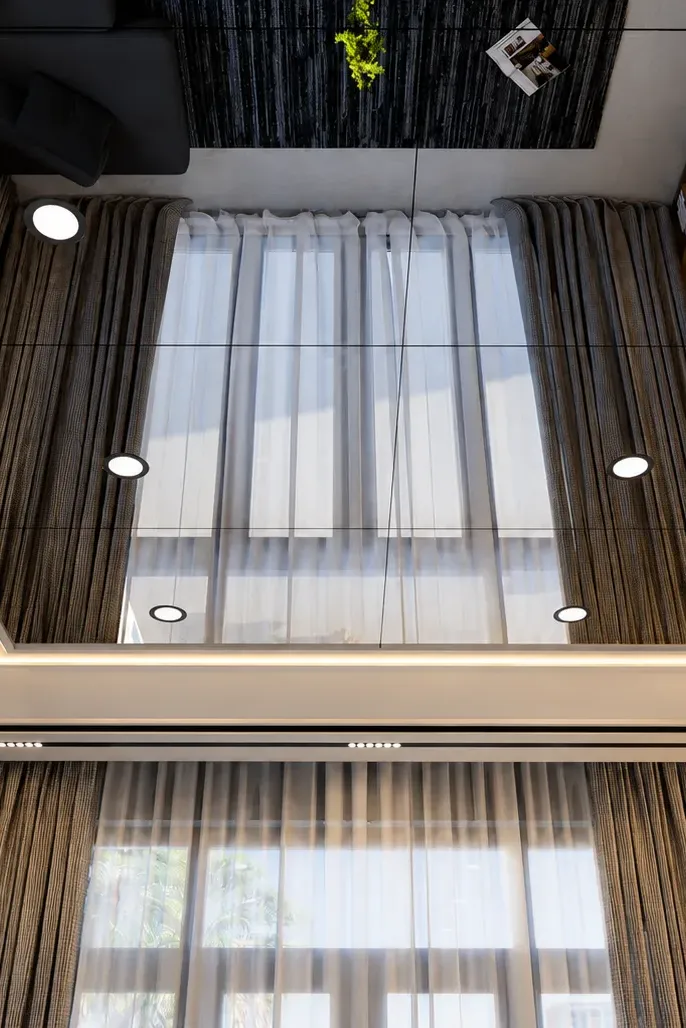
Recessed downlights, doubled in the reflection.
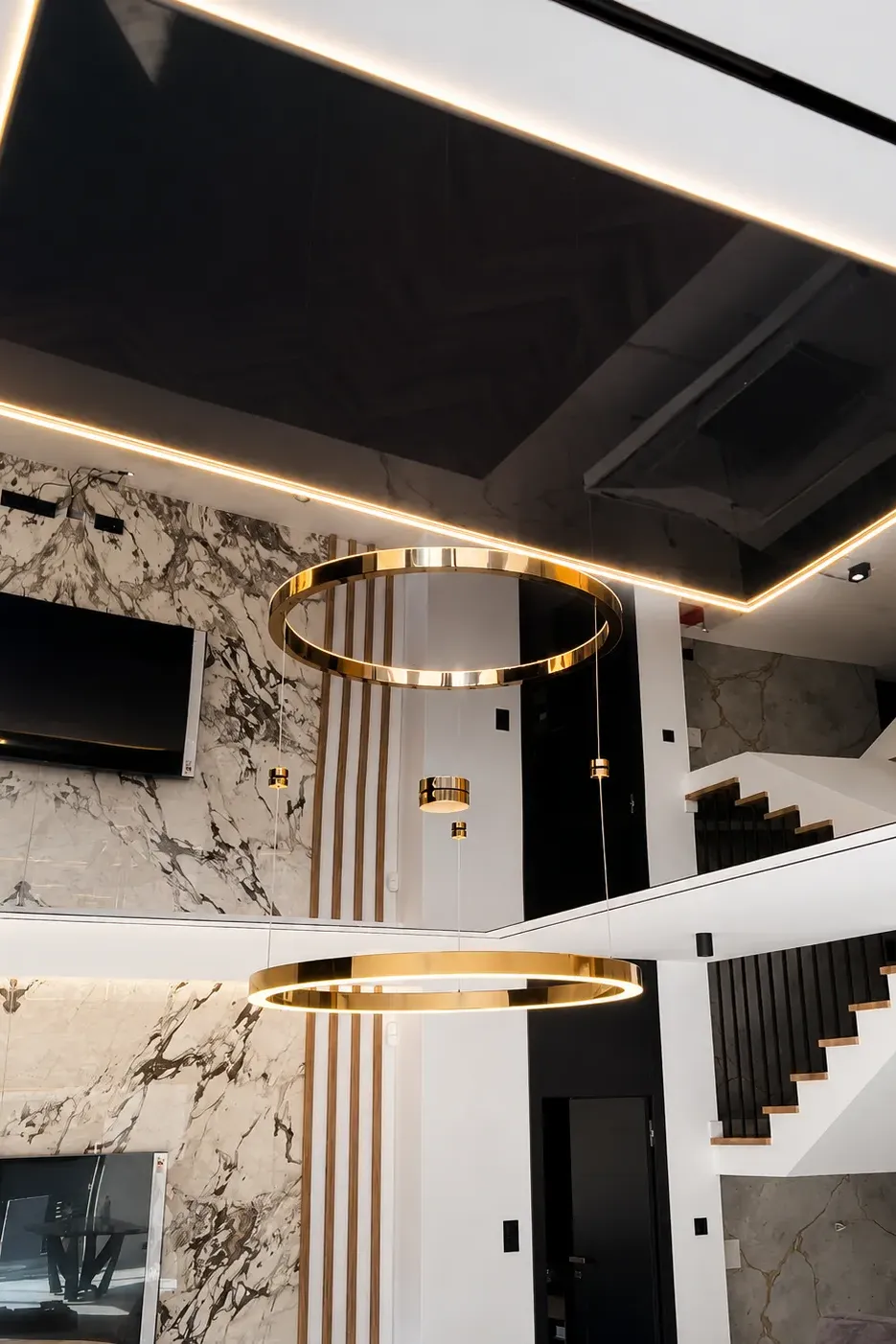
Chandeliers and pendant fittings with a striking reflected effect.
LED strips and linear profiles for depth and architectural lines.
Seamless installation up to 3.2 m width (wide-format for larger rooms).
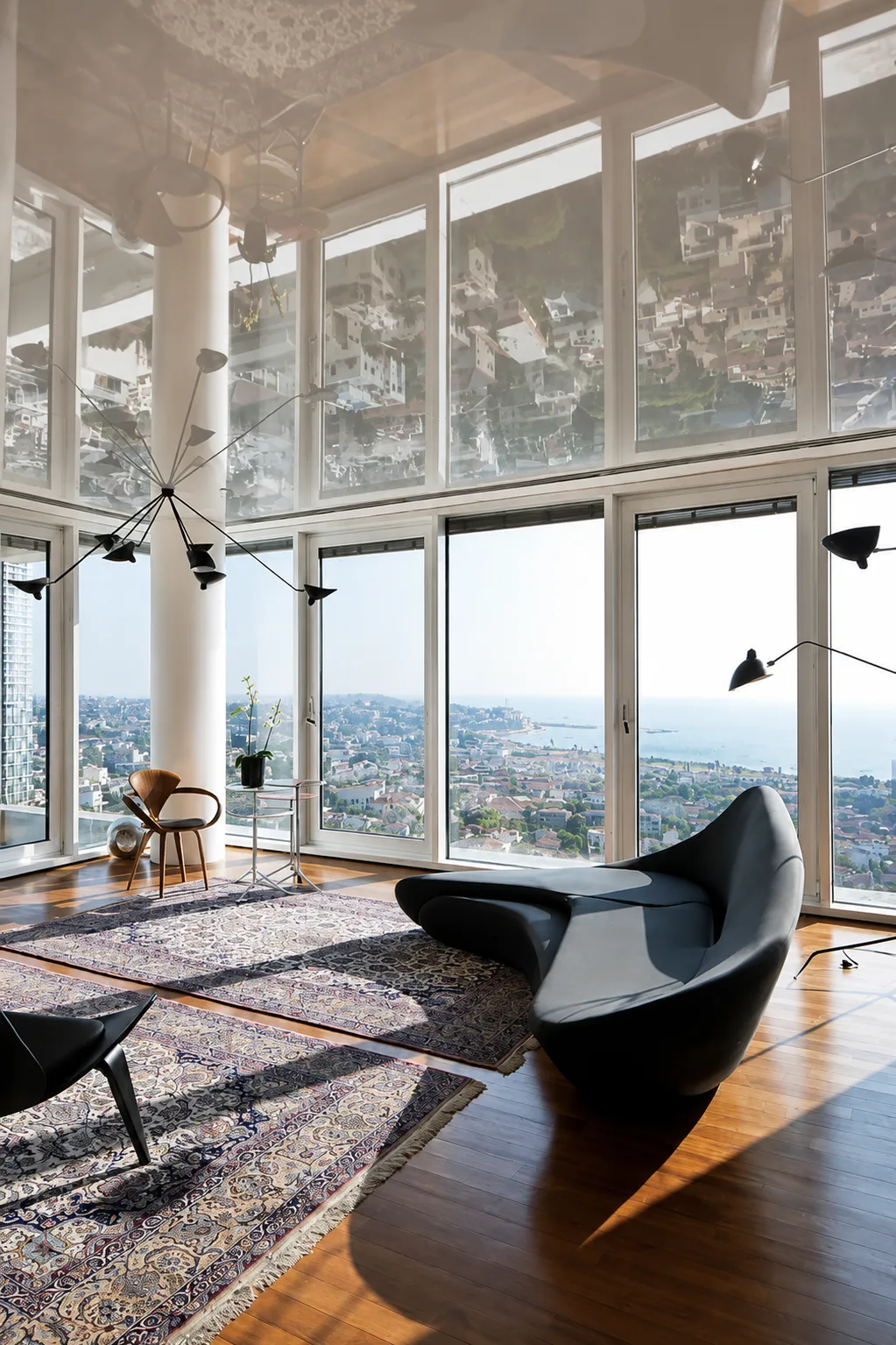
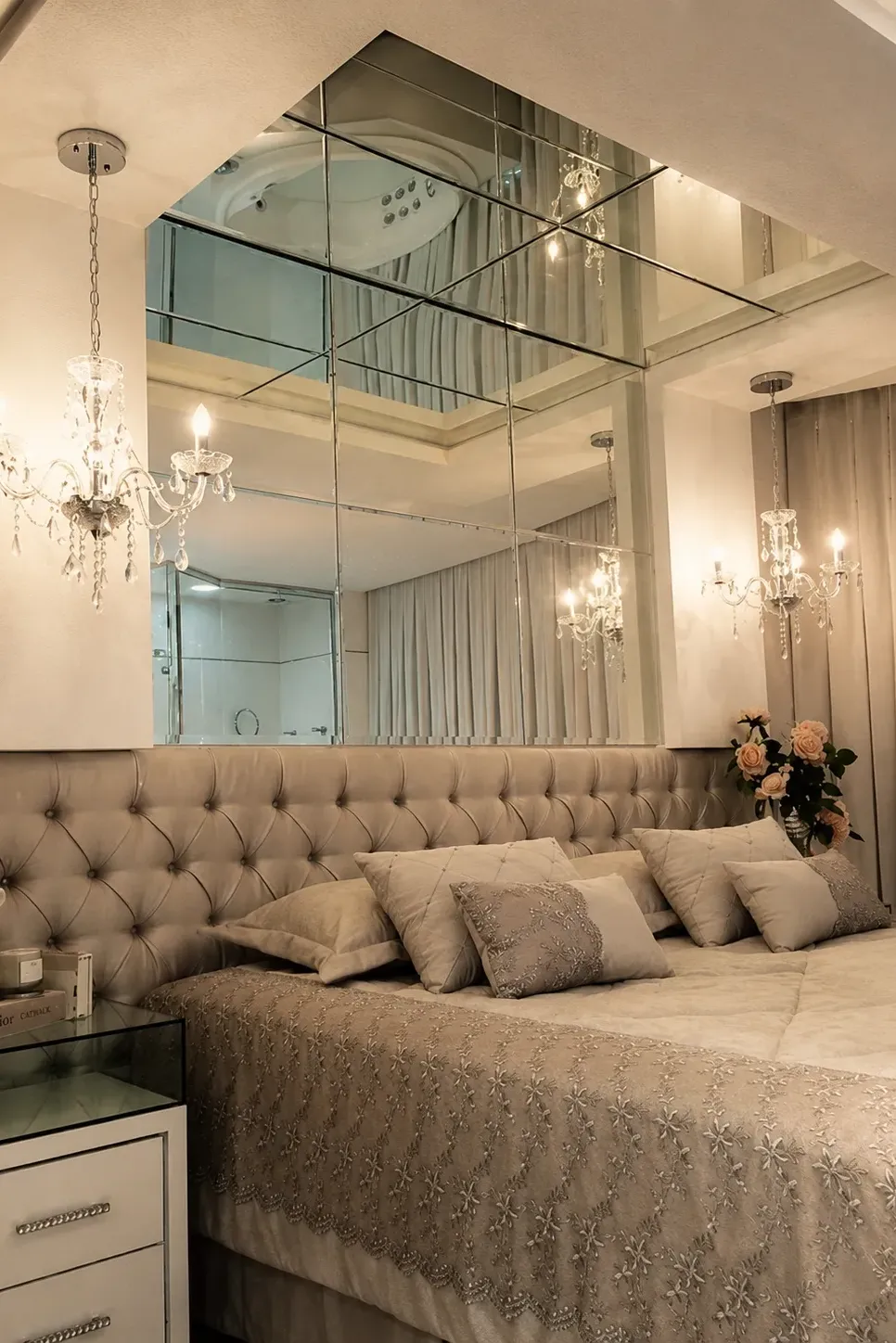
Mirror Stretch Ceiling Gallery
Mirror Stretch Ceiling FAQ
It's a stretch ceiling made from a special PVC membrane with a reflectivity rating of around 95% - practically on par with a real glass mirror. Unlike standard gloss, a mirror membrane shows the interior with full clarity and detail. The ceiling visually disappears, opening up additional space overhead.
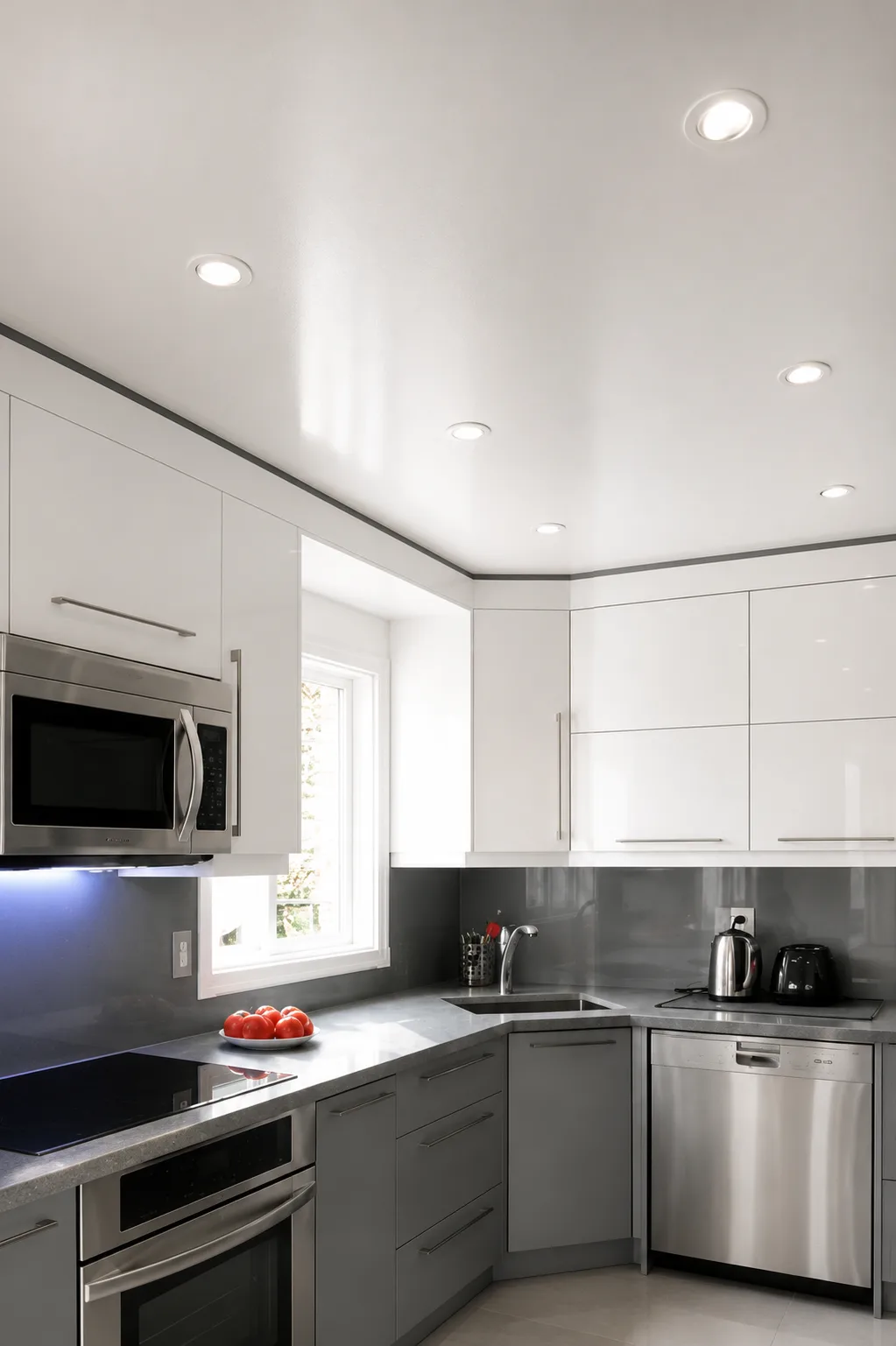
A glossy ceiling reflects light and creates a soft mirror-like effect - silhouettes of furniture and people in the reflection are blurred. A mirror ceiling shows the interior clearly, like a real mirror: you can see the furniture, the lighting, the colour of the walls, the people. Gloss adds a sense of height to the space; a mirror literally doubles the height of the room.
3-5 cm below the original ceiling. With recessed downlights integrated, it's 5-7 cm. The same as a standard stretch ceiling.
In small, low-ceilinged spaces, where you want to radically increase the height and bring in more light: smaller bathrooms, compact hallways, entrance corridors, small living rooms. Also in higher-end interiors as a design feature - restaurants, beauty salons, showrooms, bars. A mirror ceiling is often done not across the whole surface, but as a central island within a multi-level structure.
In bedrooms - the reflection of the bed and furniture directly overhead bothers a lot of people and makes it harder to sleep. In larger rooms with rich, detailed décor - the ceiling doubles every detail, and the space ends up feeling visually overloaded. In classical interiors with mouldings and heavy furniture - the mirror clashes with the style. For these cases, we'd suggest a glossy or satin membrane instead.
Significantly safer. A glass mirror on the ceiling is a risk - if it gets damaged, it shatters into sharp pieces. A mirror PVC membrane simply can't break. On top of that, it's much lighter than glass, so it doesn't load the floor slab above and doesn't call for any structural reinforcement.
For the mirror effect, a seamless install is particularly important - any join breaks the reflection. The standard membrane width is 3.2 metres. For wider rooms, we use wide-format seamless membranes, or design the mirror element to fit within a single uninterrupted section (for instance, a central island within a multi-level structure).
Yes. Before the membrane is stretched, mounting platforms are fixed to the original ceiling - that's what the equipment attaches to. A clean opening is made in the membrane, with a reinforcing ring to protect the material. A mirror ceiling also boosts the effect of any lighting - every fitting is doubled in the reflection, effectively doubling the amount of light in the room.
3-Step Process
Our Process, Made Simple
Each project is led by a single specialist from the first survey to the final handover. Clear timeline, transparent pricing and a clean, dust-free installation.
1. Survey & Samples
Free site visit, room and lighting check, physical membrane samples brought on site.
2. Design & Quote
Colour, configuration and lighting layout, with transparent itemised pricing.
3. Install & Finish
Measurement, manufacturing and clean installation by trained team, typically within 1 to 3 days.
Mirror Stretch Ceilings: mirror stretch ceilings with a space-doubling effect
A mirror stretch ceiling is a PVC membrane with a reflectivity rating of around 95% – performing almost like a real glass mirror. Unlike gloss, where the reflection is soft and slightly blurred, a mirror membrane shows the interior with full clarity – you can see the furniture, the lighting, the people, the colour of the walls. The ceiling visually disappears, opening up additional space overhead. It’s the most striking tool for visually correcting a room’s geometry of any stretch ceiling type available.
At Ceiling Design Lux, we install mirror ceilings either as a full ceiling or as a feature – a central island in a multi-level structure, an accent above a workspace, or a mirrored recess. We work with membranes from Bauf, Teqtum and Brillum – material quality is critical for mirror finishes, since cheaper alternatives produce distortion in the reflection (the “funhouse mirror” effect), which is something we steer clear of in our projects.
How a mirror ceiling works
The technology is the same as a standard stretch ceiling, but with a particular type of membrane. The PVC film is treated with a special reflective layer, which delivers the high reflectivity rating. The standard figure – around 95% – is practically indistinguishable from a glass mirror.
The visual effect – a doubling of the space. A room with a standard ceiling height of 2.7 m, fitted with a mirror ceiling, reads as a 5.4 m tall space, because the eye picks up the reflection of the floor, the furniture and the interior overhead. It gives the room a radically different sense of scale, with no changes to the layout itself.
The structure takes up 3-5 cm of headroom, or 5-7 cm with recessed downlights integrated. So physically, a mirror ceiling occupies the same space as a standard one – but visually, it delivers an effect no other solution can match.
How a mirror ceiling differs from a glossy one
This is the most common question at the consultation, since both finishes reflect light, but in quite different ways:
- Gloss delivers a soft mirror-like effect – silhouettes of furniture and people in the reflection are blurred, like in a misted-up mirror. Gloss boosts the lighting, adds a sense of height to the space, but doesn’t show a clear reflection of the interior
- Mirror reflects the space literally – like a real glass mirror. You can see specific pieces of furniture, specific people, the specific pattern on the rug below
If the goal is “more light and a touch more height” – gloss is the way to go. If the goal is “full geometric correction, the space literally doubled” – only a mirror ceiling delivers that result.
Where a mirror ceiling works best
Mirror finishes are at their most effective in spaces where you want to radically change how the room is perceived:
- Smaller bathrooms – the mirror ceiling visually doubles the height of the room, brings in more light and isn’t fazed by humidity
- Compact hallways and entrance corridors – narrow spaces feel wider and more open
- Smaller living rooms – an architectural solution for rooms where the layout doesn’t allow physical expansion
- Spa areas and treatment rooms – creates a sense of higher-end space
- Restaurants, bars, lounge areas – a mirror ceiling above a specific zone (the bar, the dance floor, a private booth) as a strong feature
- Showrooms, boutiques, beauty salons – boosts product lighting, visually expands the retail floor
A separate format is the mirrored island within a multi-level structure. Instead of a full mirror ceiling across the entire room, a central section of mirror membrane is framed by a matt or satin surround. This approach delivers the doubling effect without overwhelming the space.
When another option might suit you better
A mirror ceiling is a powerful, but not universal, solution. In some cases, it’s simply too much:
- in bedrooms, the reflection of the bed overhead bothers a lot of people on a psychological level. If you’re after a softer effect – Glossy Stretch Ceiling is the more comfortable option
- in larger rooms with rich, detailed décor, a mirror doubles up every element, and the space ends up feeling visually overloaded. A single-level ceiling without the mirror effect is more effective here
- in classical interiors with mouldings, heavy furniture and dark timber, a mirror ceiling clashes with the style
- if the room is already large and high-ceilinged, a mirror ceiling doesn’t deliver the same correcting effect it does in compact spaces. The investment in the material doesn’t pay off in this case
When we come out for the survey, we look at the geometry, the lighting and the function of the room, and give you an honest answer on whether a mirror ceiling is the optimal solution, or whether a less intense alternative would be the better fit.
Lighting and built-in fittings
A mirror ceiling amplifies any light source – every fitting is visually doubled in the reflection, which effectively boosts the amount of light in the room. That’s useful for spaces where strong lighting matters, without needing to add more fittings.
For a mirror ceiling, seamless installation is particularly important – any join breaks the reflection and makes it look uneven. The standard membrane width is 3.2 metres. For wider rooms, we use wide-format mirror membranes, or design the mirror element to fit within a single uninterrupted section.
Built-in fittings – recessed downlights, vents, speakers, sensors – are integrated into the mirror membrane via mounting platforms fixed to the original ceiling, with a thermal ring protecting the PVC from heat and stopping the membrane sagging under the weight of the equipment.
Care
A mirror ceiling needs a touch more attention than a standard glossy one. Dust, fingerprints and watermarks show up more clearly on a mirror surface – much like on any regular mirror. For day-to-day care, a soft microfibre cloth is enough; for marks, a specialist cleaner for mirror surfaces, without abrasives or harsh solvents.
On request, we provide an annual professional clean of the membrane – a separate service by arrangement.
Ready to talk through your project?
Book a free survey – we’ll come out, look at the room’s geometry and lighting levels, show you samples of Bauf, Teqtum and Brillum mirror membranes. The mirror effect doesn’t translate well to photographs, so we always bring physical samples – on site, you’ll see straight away how the membrane will look in your particular space.
The survey and consultation are free, with no obligation to commit. You’ll find our phone number and contact form on the contact page.