
Services
Our Services
At Ceiling Design Lux, we install eight types of stretch ceiling - from minimalist shadow gaps to bespoke carved designs - tailored to your interior.
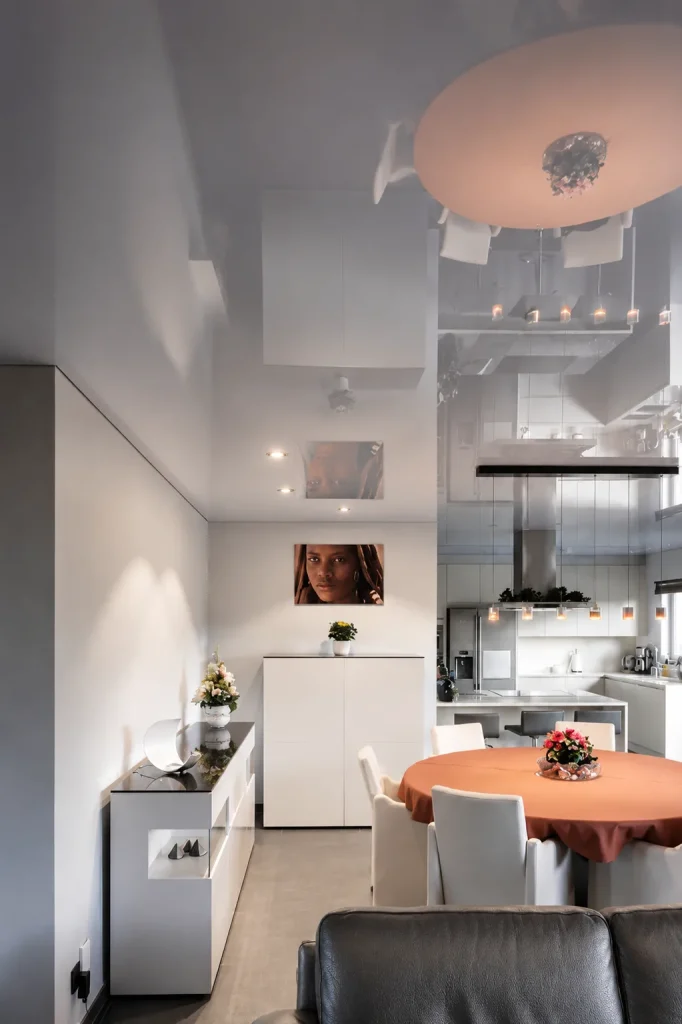
Glossy Stretch Ceilings
A high-gloss PVC membrane that reflects light and visually opens up the room. The right choice for spaces with low ceilings or limited natural light.
Key Benefits
Reflects light and adds visual height.
Suited to bathrooms, kitchens and hallways.
Full colour range including metallics and pearl.
3 to 5 cm of headroom.
This is Modal Title
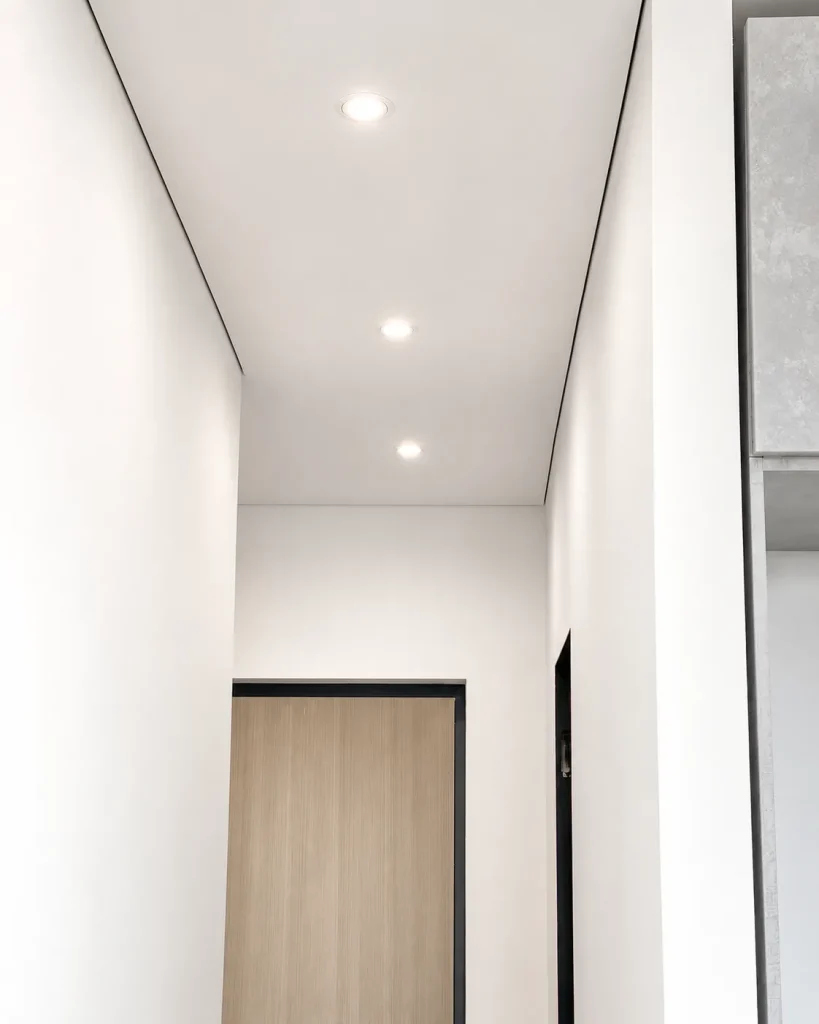
Satin Stretch Ceilings
A satin membrane with a soft micro-texture that diffuses light evenly without sharp highlights. The optimal choice for bedrooms, children's rooms and living rooms.
Key Benefits
Soft diffused light, no glare.
Calm atmosphere for rest and relaxation.
Natural feel of fine textile.
3 to 5 cm of headroom.
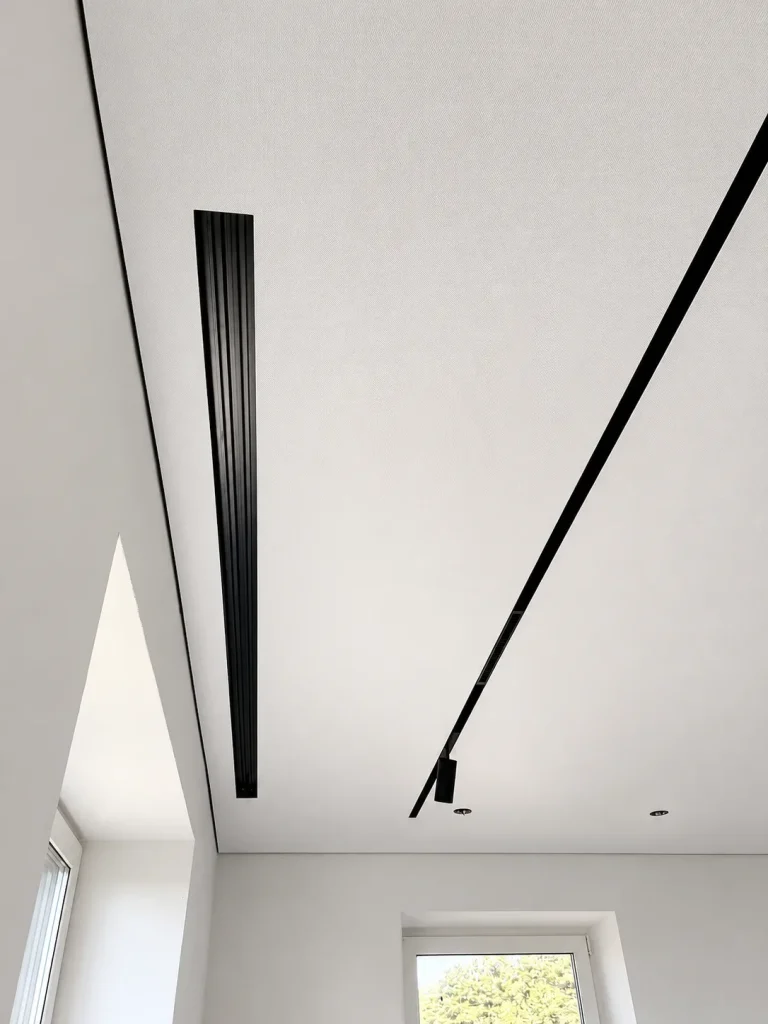
Shadow Stretch Ceilings
A shadow gap ceiling with a purpose-built recess around the perimeter, creating a floating-ceiling effect. The go-to choice for minimalist interiors where clean lines matter.
Key Benefits
Floating-ceiling effect, no decorative trim.
Black matt anodised aluminium profile.
Ideal for lofts and contemporary spaces.
Walls must be straight for a clean line.
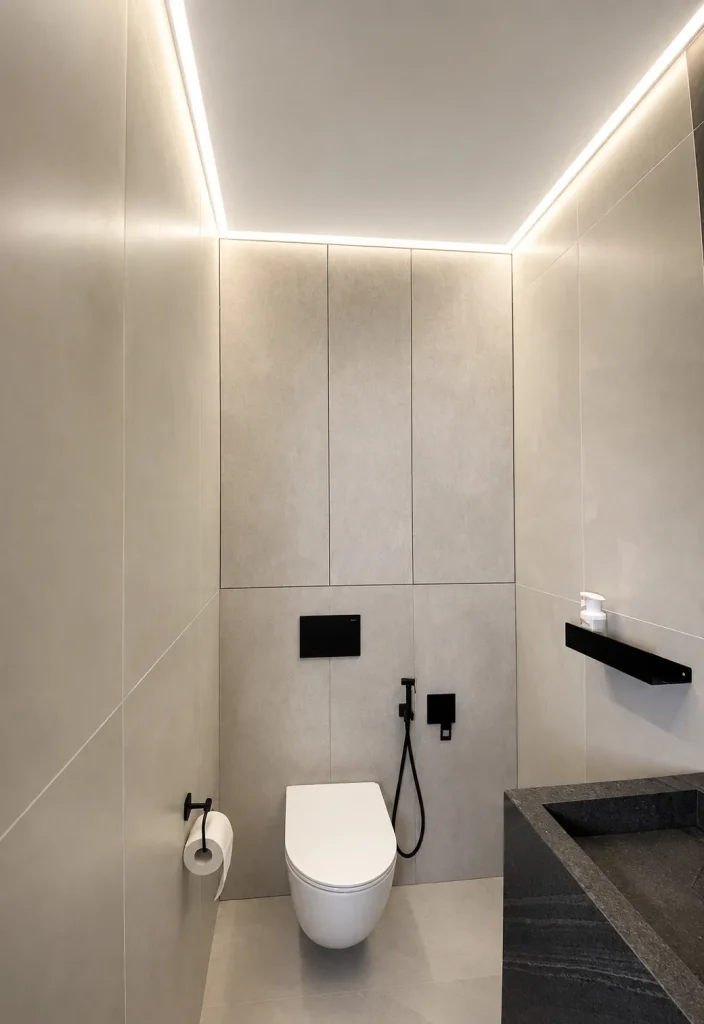
Gapless Stretch Ceilings
A seamless installation where the membrane sits flush against the wall, with no trims and no joints. Reads as perfectly painted plasterboard, without the cracking that plaster develops over time.
Key Benefits
No visible joints or trims at the perimeter.
Alternative to skim-and-paint plasterboard.
Installs in 1 to 3 days vs 2 to 3 weeks.
No building dust during install.
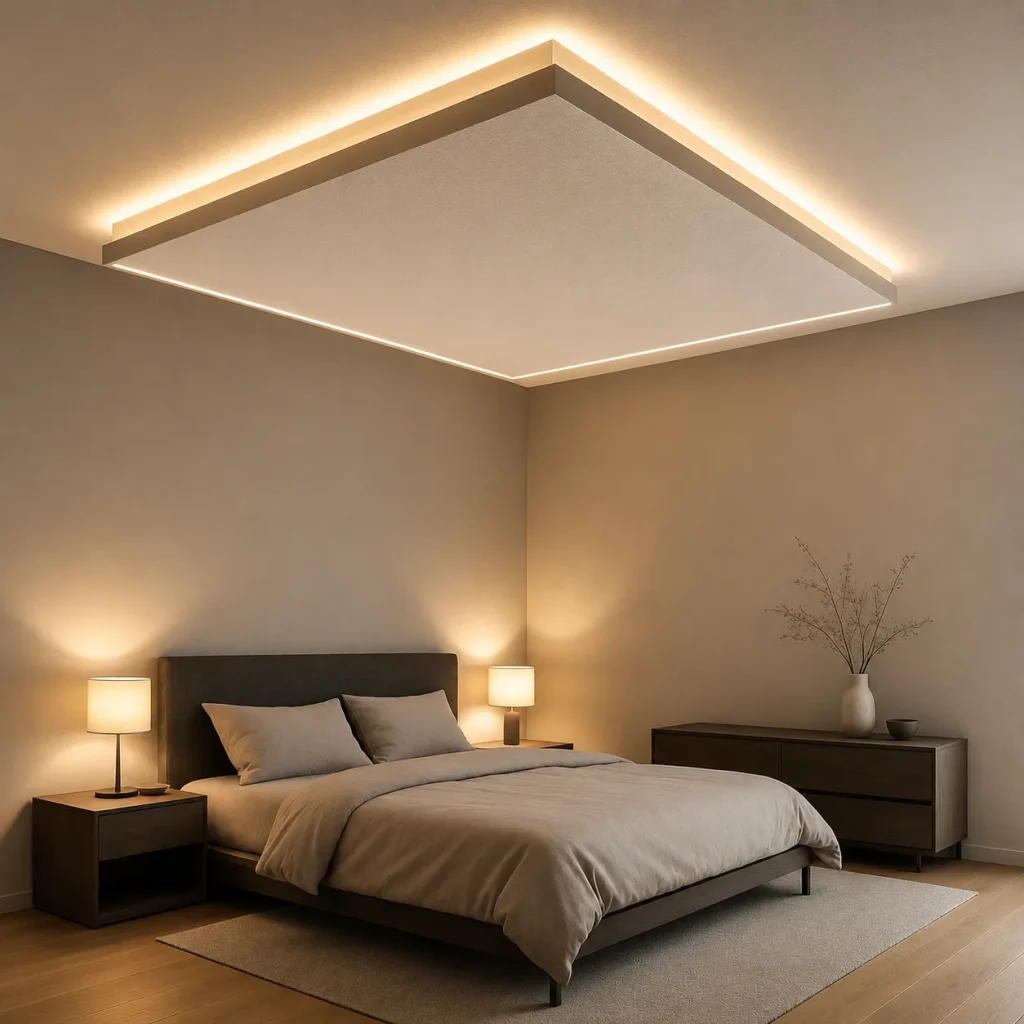
Multi-level Stretch Ceilings
A multi-level structure with two or more membrane layers at different heights. Zones open-plan spaces, conceals services and integrates complex lighting schemes directly into the architecture.
Key Benefits
Zones open-plan rooms without partitions.
Hides ventilation, cabling and air-con.
Integrated LED, profiles and curtain pelmets.
Requires ceiling height of 2.7 m or above.
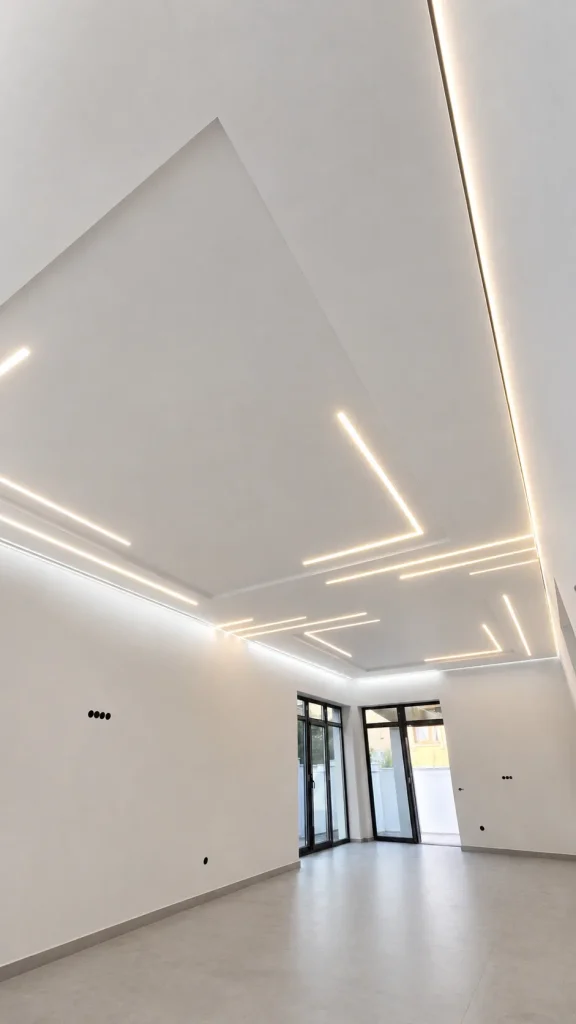
Carve Stretch Ceilings
A two-layer structure where laser-cut patterns in the lower membrane reveal integrated backlighting behind. Turns the ceiling into a standalone design feature with two modes: a daytime look and an evening luminous one.
Key Benefits
Laser-cut patterns to any design.
LED, RGB, gradient or fibre-optic backlighting.
Two modes: daytime graphic, evening light.
Ceiling height 2.6 m or above.
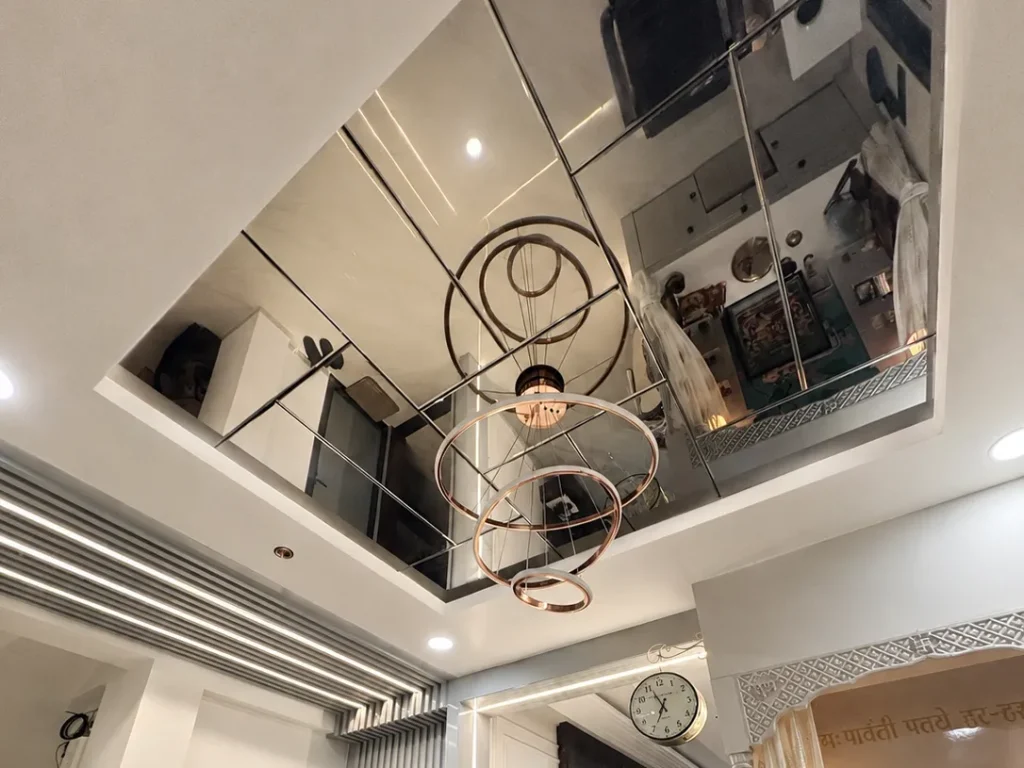
Mirror Stretch Ceilings
A mirror PVC membrane with around 95% reflectivity, practically indistinguishable from a glass mirror. Visually doubles the height of the room and is the most effective tool for correcting compact geometry.
Key Benefits
Around 95% reflectivity, mirror-like clarity.
Visually doubles room height.
Best for compact bathrooms, hallways and bars.
Available as full ceiling or feature insert.
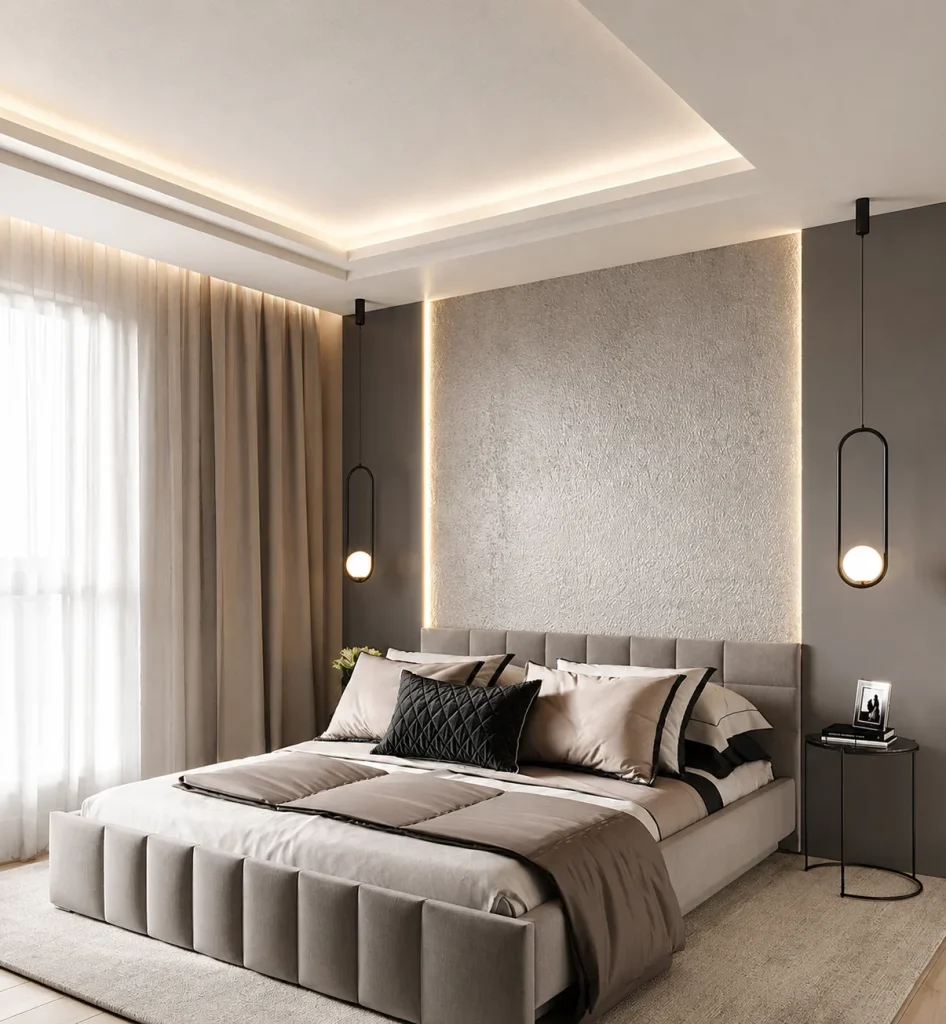
Fabric Stretch Ceilings
A polyester membrane with polyurethane coating, fitted at room temperature without any heat. Natural matt finish, higher resilience than PVC, and noticeably better acoustic absorption.
Key Benefits
Heat-free installation at room temperature.
Natural matt texture, no reflectivity.
Eco-conscious, ideal for bedrooms and children's rooms.
Acoustic absorption for cinemas and studios.
Gallery
FAQ
Standard installations lose between 3 and 5 cm from the existing ceiling. Multi-level and carve designs need more - usually from 7 to 10 cm depending on the design and any integrated lighting. For rooms with low ceilings under 2.4 m, we'd recommend glossy or gapless, which minimise perceived headroom loss.
Most single-room installations complete in a single day. A full flat or three-to-four room job takes 2 to 3 days. Multi-level and carve ceilings take longer — from 3 to 5 days depending on complexity. Unlike plasterboard, there's no drying time, no dust and no repainting afterwards.
Yes - this is one of the main advantages of stretch ceilings over plasterboard. We routinely integrate downlights, LED profiles, pendants, ceiling speakers, extractor fans and air conditioning grilles. It's easier to plan these at the design stage, but we can also work around existing fixtures.
We provide a 12-year warranty on the membrane and a 2-year warranty on installation. In practice, a properly installed stretch ceiling lasts 20 to 25 years without losing shape, colour or finish. It doesn't crack, doesn't need repainting and doesn't yellow with age.
3-Step Process
Our Process, Made Simple
Each project is led by a single specialist from the first survey to the final handover. Clear timeline, transparent pricing and a clean, dust-free installation
1. Survey & Samples
Free site visit, room and lighting check, physical membrane samples brought on site.
2. Design & Quote
Colour, configuration and lighting layout, with transparent itemised pricing
3. Install & Finish
Measurement, manufacturing and clean installation by trained team, typically within 1 to 3 days.
Our Stretch Ceiling Services in London
At Ceiling Design Lux, we design, manufacture and install stretch ceilings across London and the rest of England. Our portfolio covers eight ceiling types that between them address every architectural and design brief, from minimalist single-level installations to bespoke multi-level structures with integrated lighting.
A stretch ceiling is a made-to-measure membrane fitted into a specialist perimeter profile to create a perfectly smooth ceiling surface. Depending on the finish, it can look like freshly painted plaster, soft satin, high-gloss lacquer, dense textile, mirror glass or a bespoke architectural feature with laser-cut patterns and backlighting. We work with certified European membranes from Bauf, Teqtum and Brillum, cut to the exact dimensions of each room.
How stretch ceiling installation works
The installation is dry, clean and fast. There is no filler dust, no long drying time and no need for multiple coats of paint. For standard single-level ceilings, the fitting takes 1 to 3 days depending on the size of the room, the number of built-in fittings and the complexity of the design. Multi-level and carved ceilings typically take 2 to 4 days.
A lightweight aluminium or PVC profile is fixed around the perimeter of the room, usually 3 to 7 cm below the original ceiling. The membrane is then tensioned into the profile to form a smooth, even surface. Built-in fittings, including recessed downlights, chandeliers, LED strips, vents, speakers and sensors, are integrated at the design stage and mounted on platforms fixed to the original ceiling, so nothing is attached to the membrane itself.
Eight types of stretch ceiling
Our range is designed to cover every project brief we come across in London, from period property renovations to new-build fit-outs and premium commercial interiors.
Glossy Stretch Ceilings use a high-gloss PVC membrane that reflects light and the surrounding interior. The finish visually opens up the room and adds a sense of height, making it especially effective in bathrooms, kitchens, hallways and smaller residential spaces with limited natural light.
Satin Stretch Ceilings use a satin membrane with a soft micro-texture that diffuses light evenly without sharp highlights. This finish creates a calm atmosphere, which is why it works so well in bedrooms, children’s rooms and living rooms where a restful mood matters.
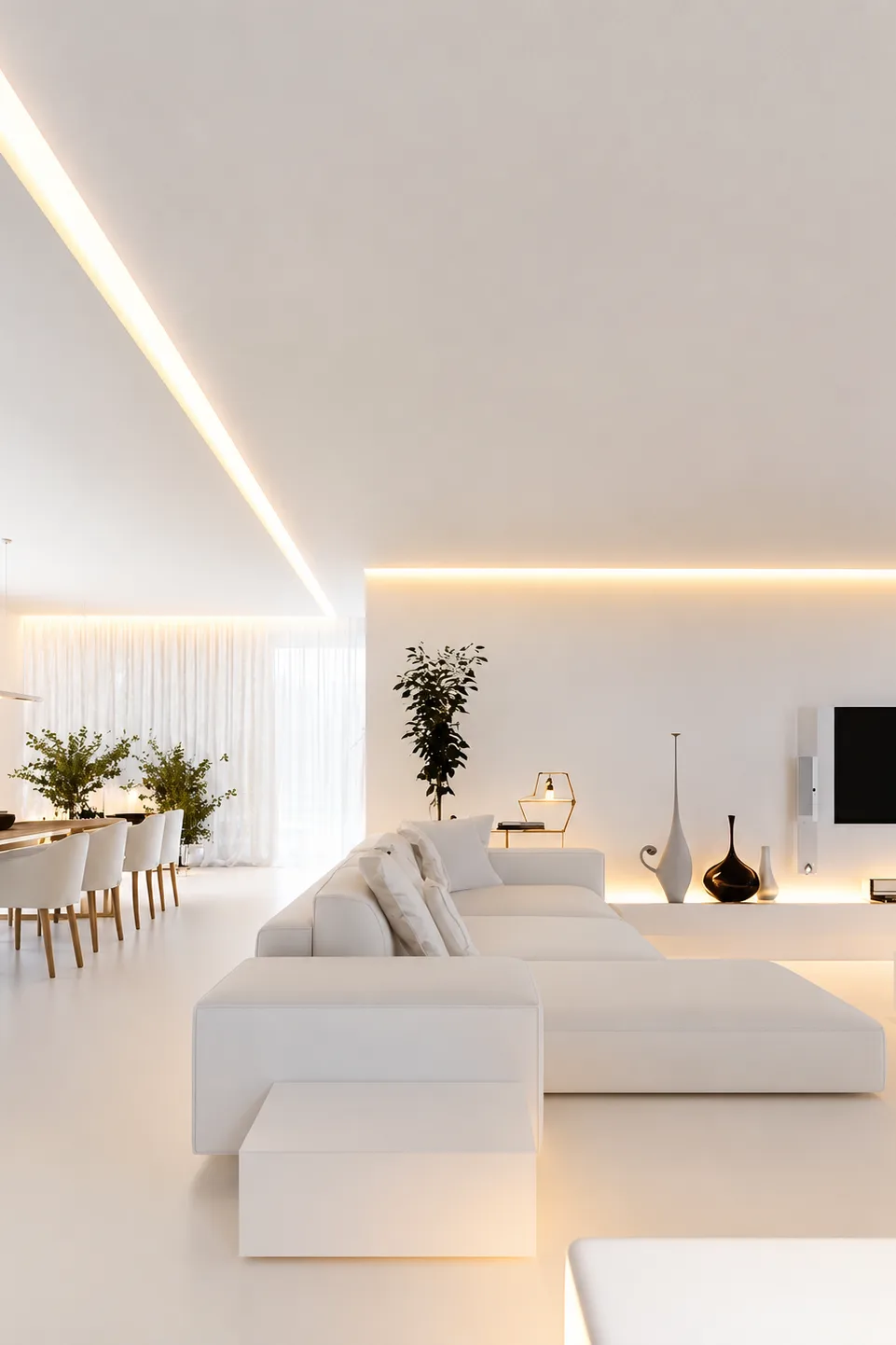
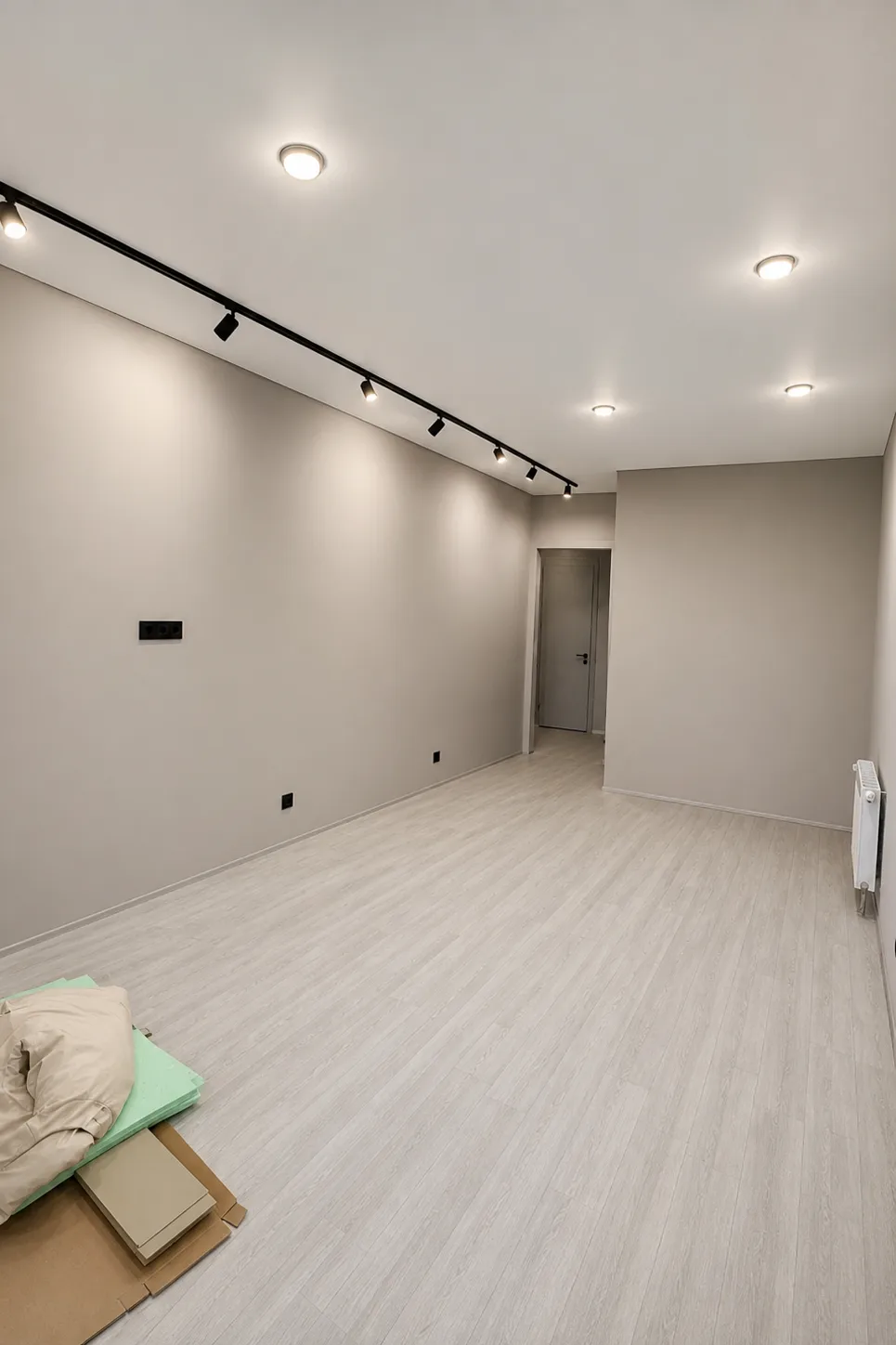
Shadow Stretch Ceilings use a shadow gap detail with a purpose-built recess around the perimeter, creating a floating-ceiling effect. The shadow line reads as clean architectural geometry, which is why this option is the go-to choice for lofts, minimalist interiors and contemporary spaces.
Gapless Stretch Ceilings use a specialist profile that presses the membrane directly against the wall, with no visible joint and no decorative trim. The finish reads as perfectly painted plasterboard, but without the risk of cracking that plaster develops at the wall junction over time.
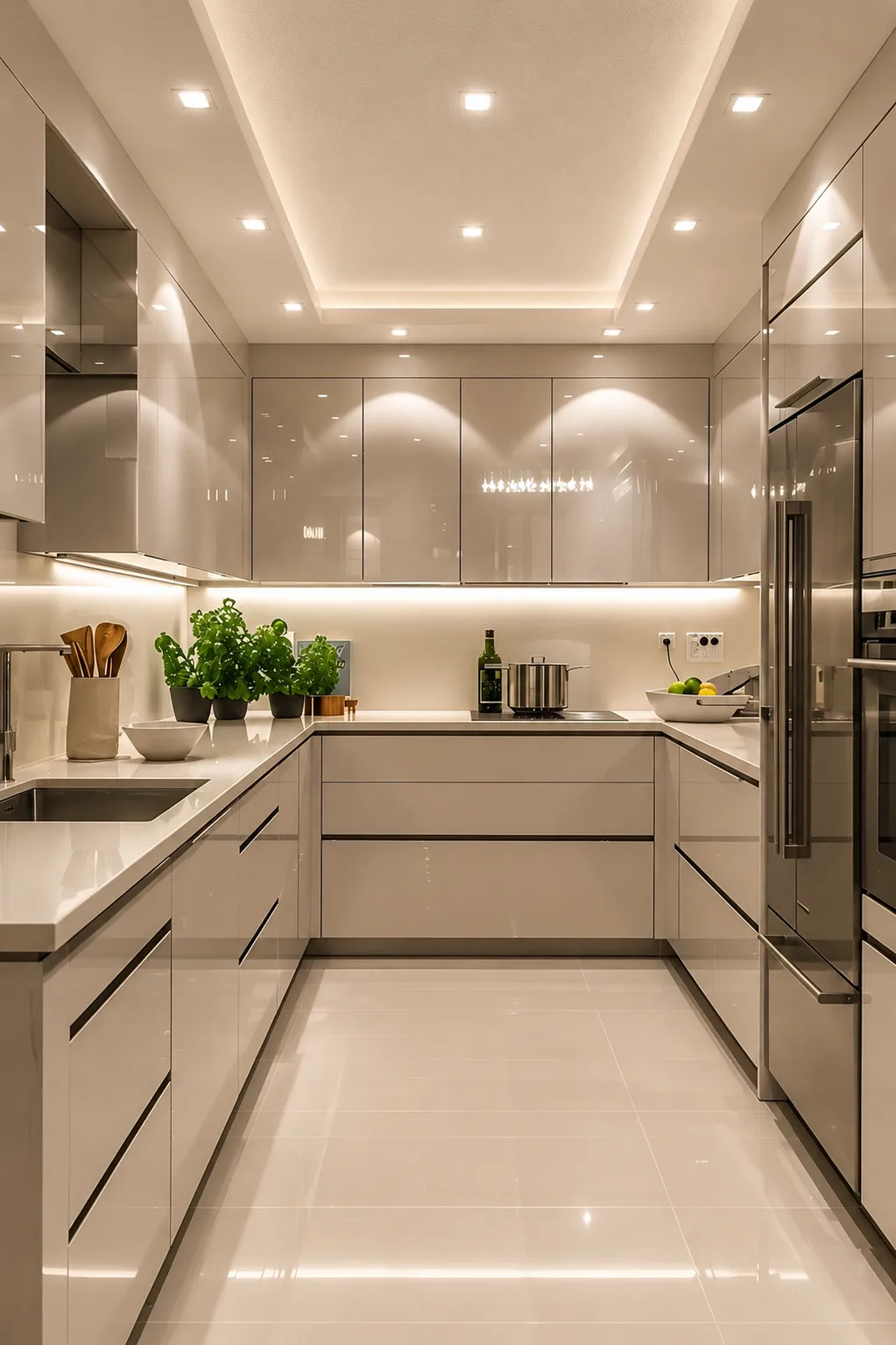
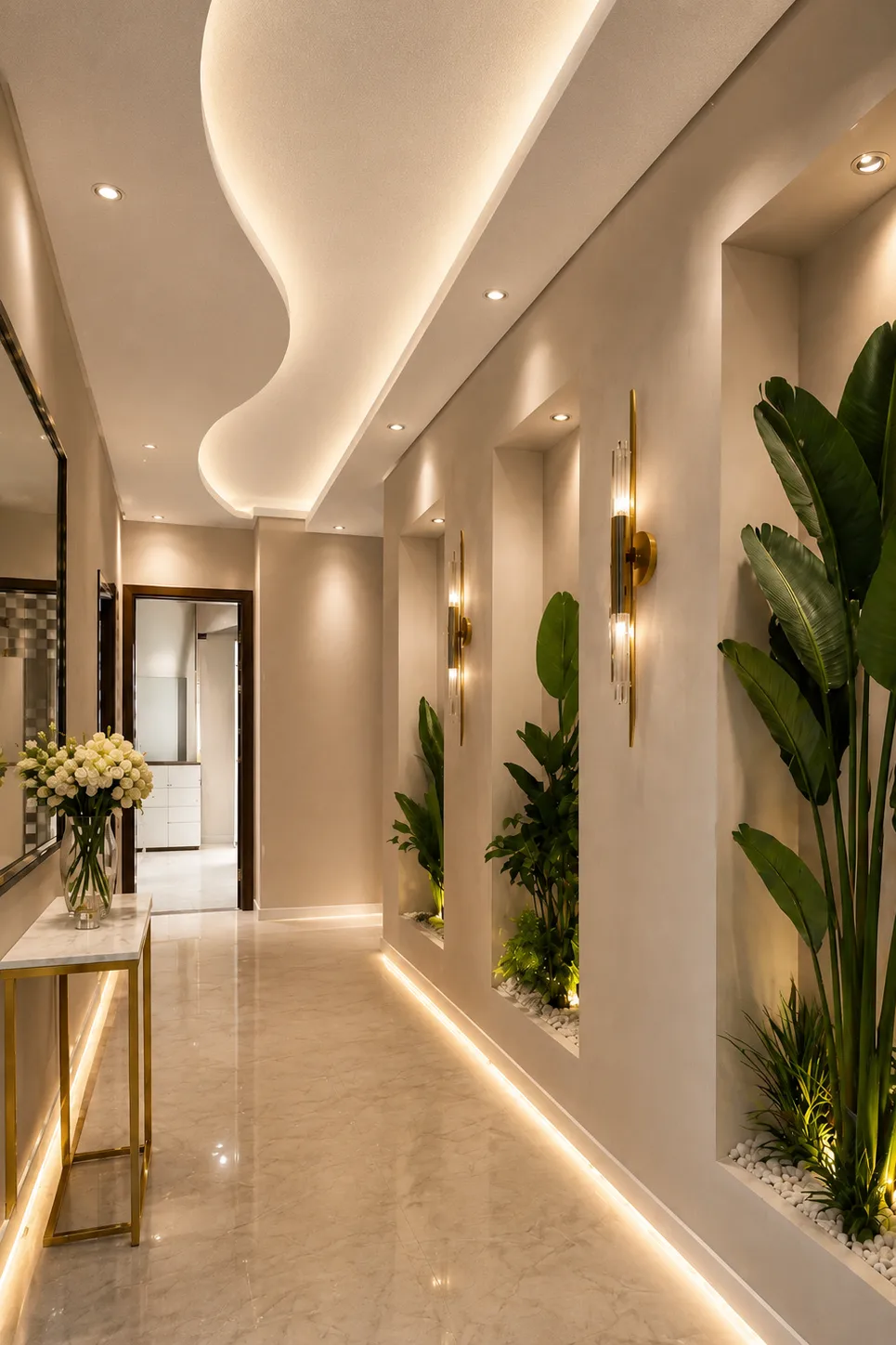
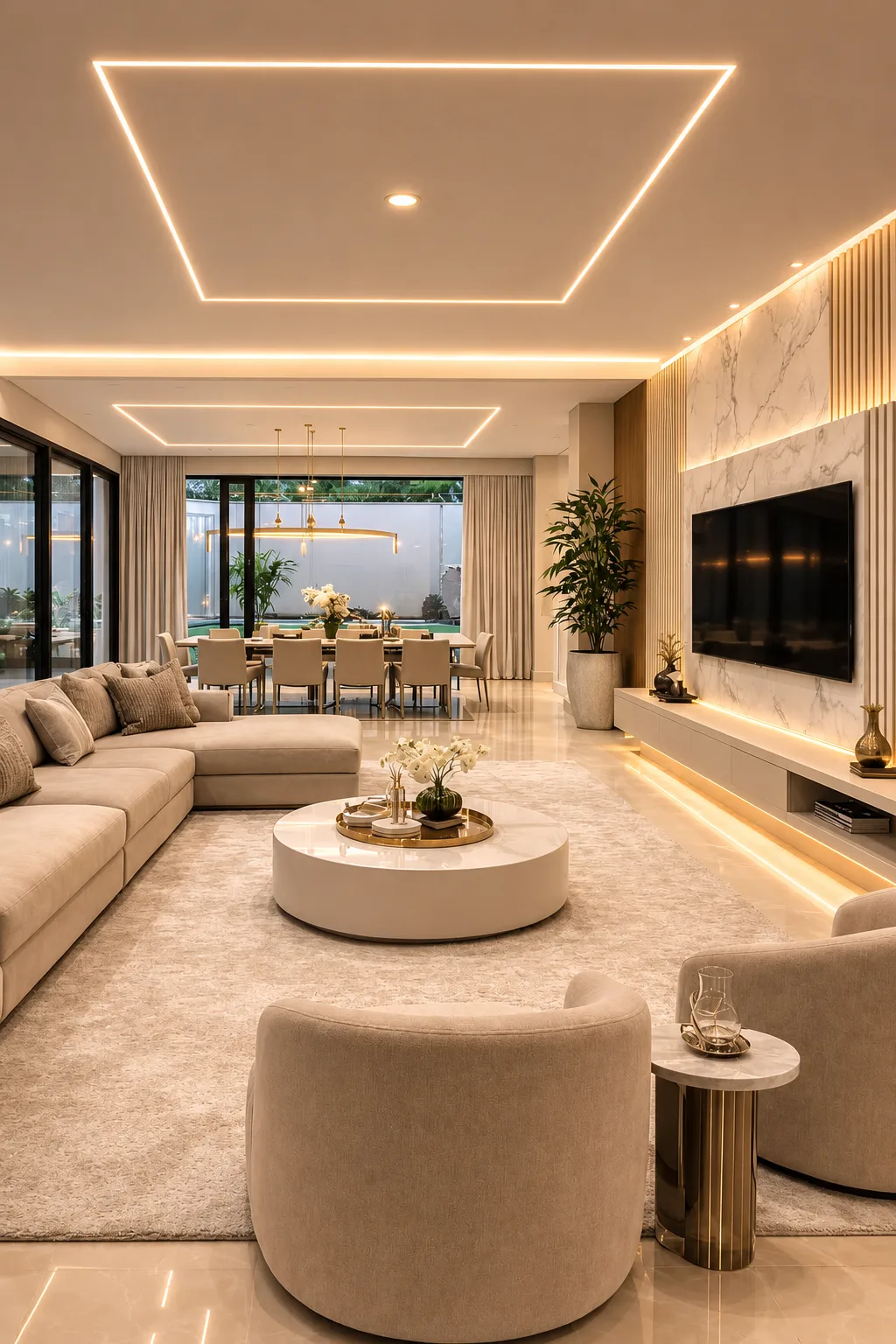
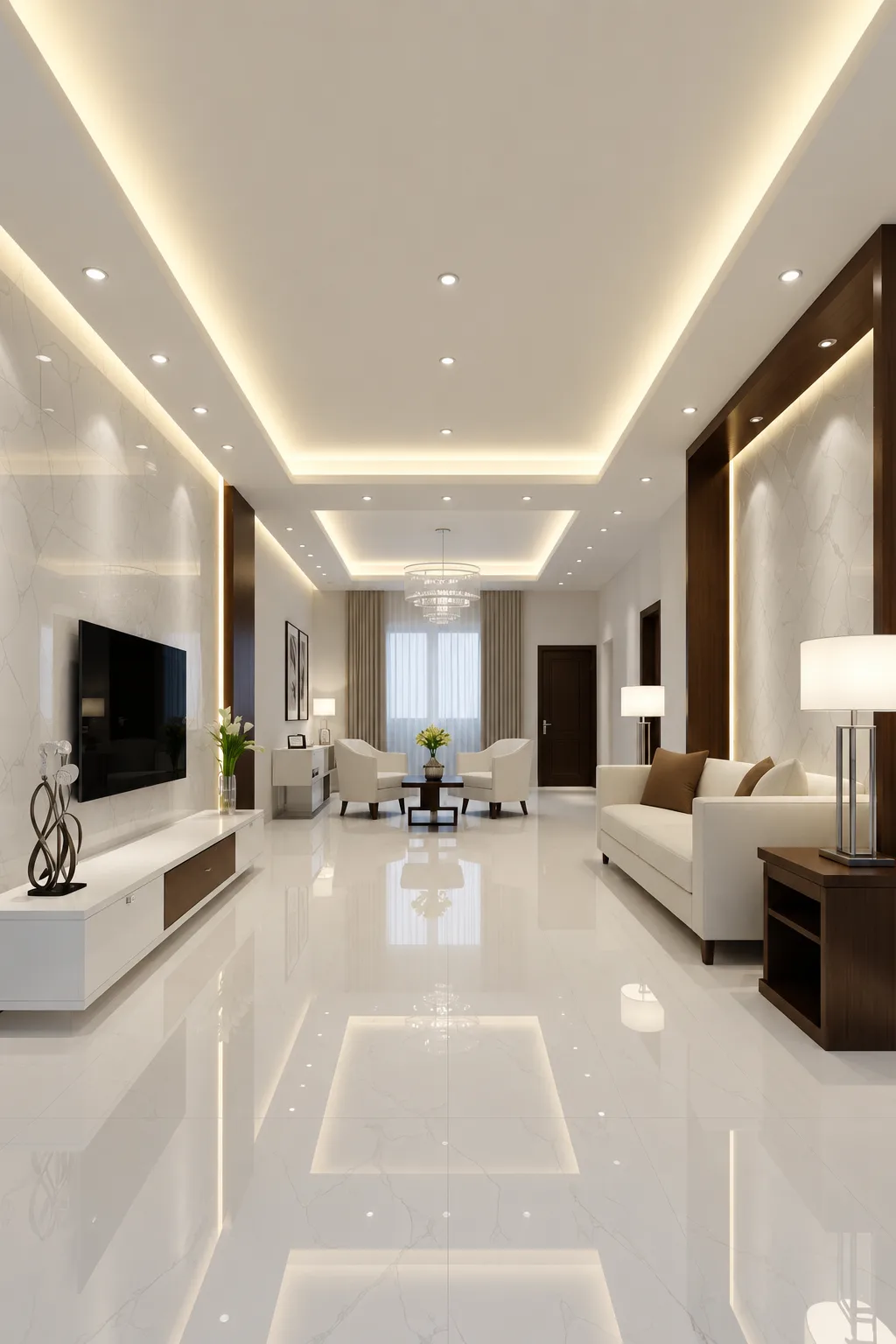
Multi-level Stretch Ceilings use two or more membrane layers at different heights, zoning open-plan spaces and concealing services like ventilation and cabling. Complex lighting schemes are integrated directly into the transitions between levels, so the ceiling shapes the entire lighting concept of the room.
Carve Stretch Ceilings use a two-layer structure where laser-cut patterns in the lower membrane reveal integrated backlighting behind. The ceiling has two modes: a daytime look with the pattern as decorative graphics, and an evening one as a luminous composition. Patterns can be chosen from a catalogue or worked from a custom sketch.
Mirror Stretch Ceilings use a PVC membrane with around 95% reflectivity, practically indistinguishable from a glass mirror. The visual effect is a doubling of the space, which makes this option the most effective tool for correcting compact geometry in smaller bathrooms, hallways and boutique interiors.
Fabric Stretch Ceilings use a polyester membrane with polyurethane coating, fitted at room temperature without heat. The natural matt finish, higher resilience compared to PVC and noticeably better acoustic absorption make fabric ideal for bedrooms, children’s rooms, home cinemas and recording studios.
Where stretch ceilings work best in London
Stretch ceilings are especially useful in London interiors where finish quality, speed and long-term practicality matter. They work well across both residential and commercial spaces:
- Flats and apartments, where a clean way to refresh ceilings without weeks of dusty work matters, especially in lived-in homes or rental properties
- Period properties, where the original ceiling has cracks, uneven plaster, old paint layers or patched areas
- New-build homes, where the flexible membrane helps avoid the visual problem of settlement cracks that often appear in the first years after completion
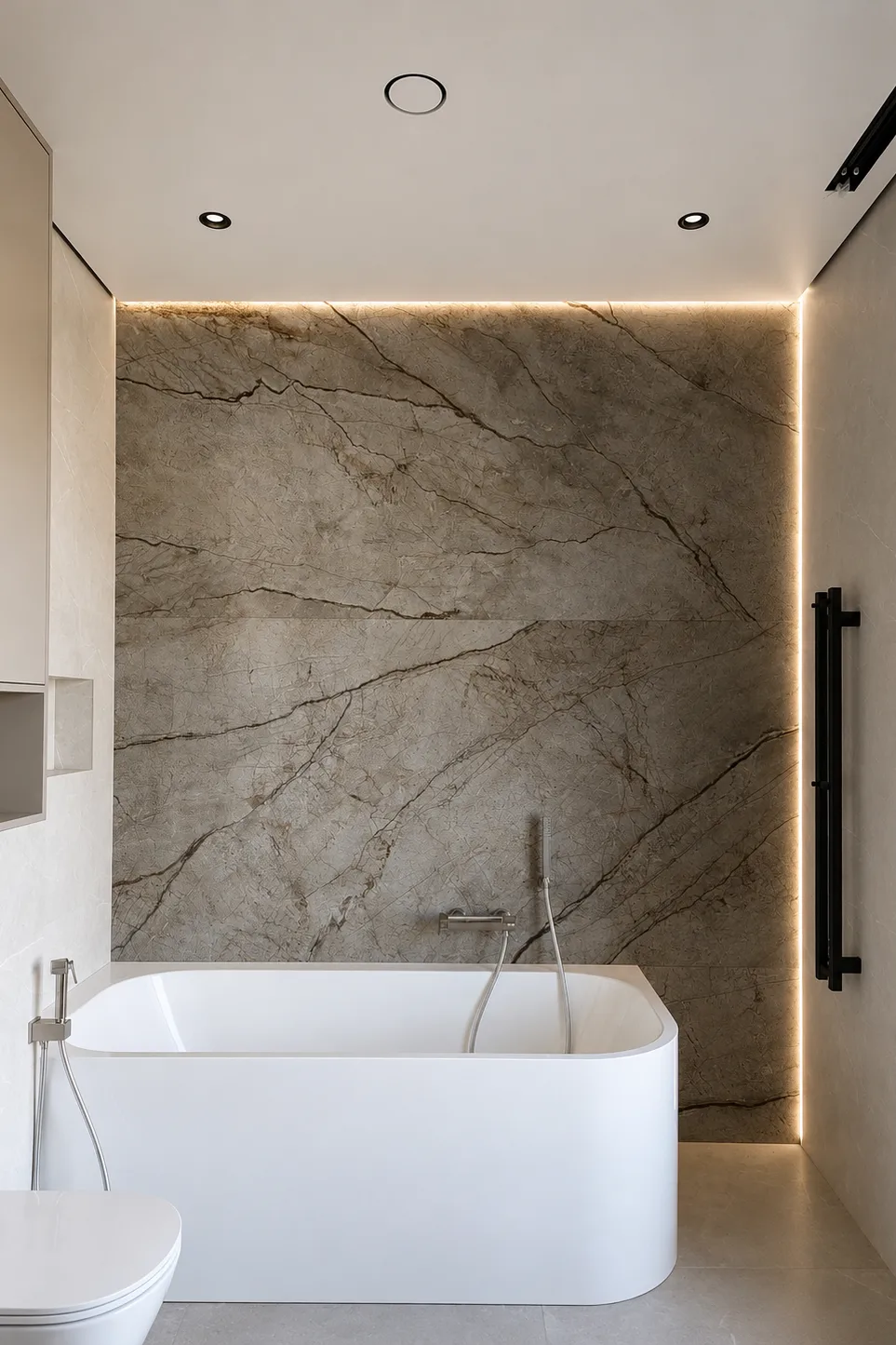
- Bathrooms and kitchens, where PVC stretch ceilings handle humidity, steam and odours, and are easy to wipe clean
- Hallways and corridors, where glossy, satin or mirror finishes can visually open up narrow spaces and improve light levels
- Living rooms and bedrooms, where satin, matt or fabric finishes create a calm, clean surface that works with both modern and classical interiors
- Beauty salons and clinics, where a smooth stretch ceiling helps create a cleaner, more polished impression for clients
- Restaurants, bars and hospitality, where stretch ceilings allow integrated lighting, zoning, acoustic improvement and stronger design features
- Offices, showrooms and retail interiors, where gapless, shadow and multi-level ceilings create a clean architectural finish without unnecessary visual clutter
When another ceiling option might suit you better
A stretch ceiling is a flexible solution, but the exact type needs to be chosen carefully. In very low rooms, a complex multi-level structure may take up too much headroom. In that case, a gapless, satin or glossy single-level ceiling is usually more effective. In interiors with uneven walls, shadow gap and gapless ceilings need extra attention, since these systems expose the wall geometry rather than hiding it, so the walls may need preparation before installation.
In classical interiors with mouldings, heavy timber furniture or traditional detailing, a strong mirror or high-gloss surface can feel out of place. Satin, matt or fabric options usually sit more naturally in this kind of space. In bathrooms and kitchens, fabric is usually not the most practical choice, because it does not handle water and steam the same way as PVC. For wet rooms, glossy or satin PVC is normally the better option.
When we come out for the survey, we talk through these points honestly. The goal is not to push the most complex product, but to choose a ceiling that suits the room, the property and the way the space is used.
Lighting and built-in fittings
Stretch ceilings work particularly well with integrated lighting. The lighting layout is planned before installation, so fittings sit neatly within the ceiling rather than looking added on afterwards.
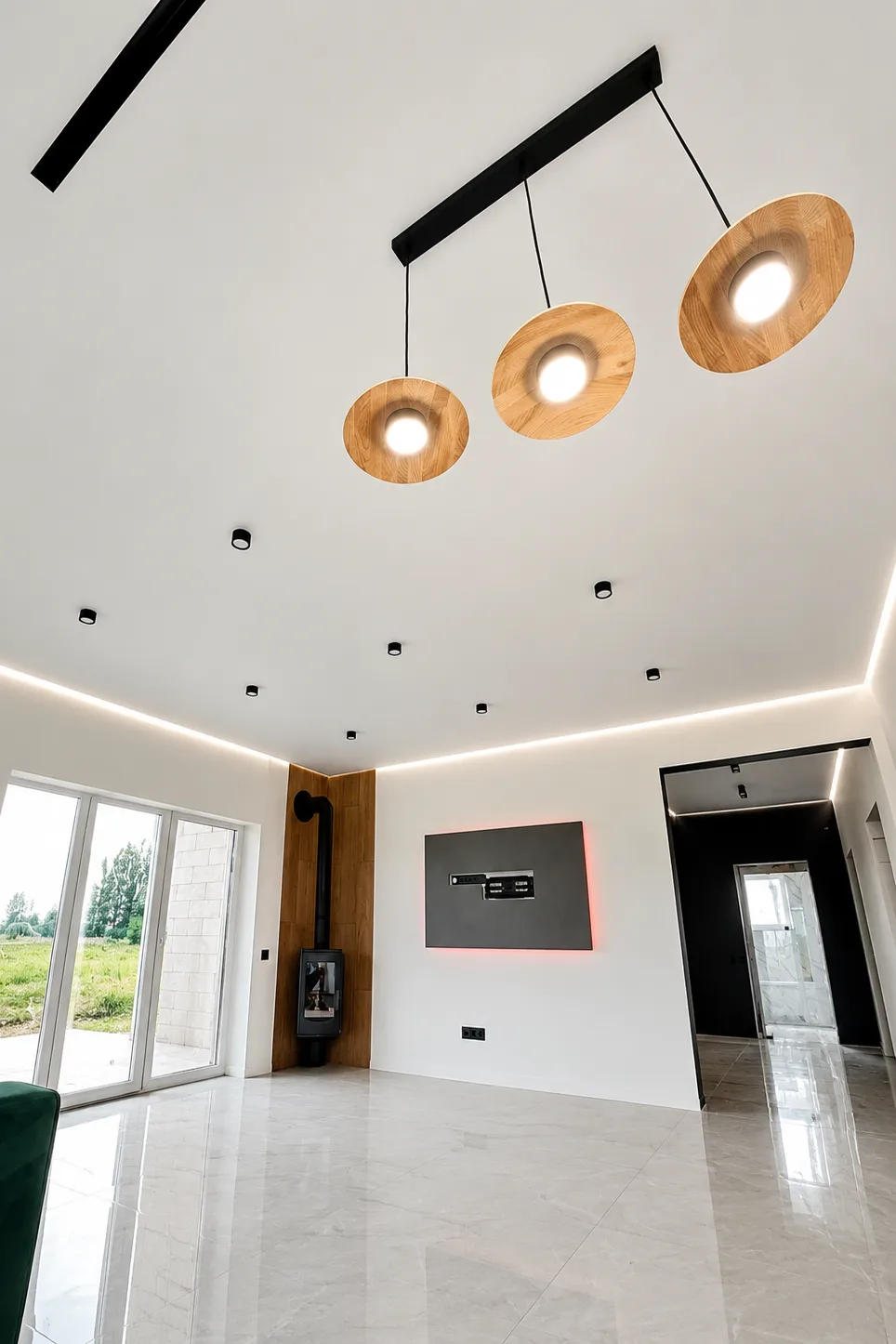
Lighting options we regularly integrate include recessed downlights, chandeliers, pendant fittings, LED strips, linear lighting profiles, track lighting systems, concealed perimeter lighting and backlighting for carved or translucent ceilings.
Built-in fittings we regularly integrate include vents, speakers, smoke alarms, cameras, sensors, extractor grilles and air-conditioning elements.
The fittings are not attached to the membrane itself. They are installed on mounting platforms secured to the original ceiling, with the membrane carefully cut around each fitting point. For PVC ceilings, thermal rings are used to protect the material from heat and keep the cut-out stable.
Free stretch ceiling survey in London
The first step is a free survey. We come out to the property, check the ceiling height, wall condition, room geometry, lighting layout and any existing services that need to be considered. We bring physical material samples on site, so you can see how different finishes look in the actual lighting of your room. This matters because gloss, satin, mirror, matt and fabric membranes can look very different depending on daylight, artificial lighting and the colours used in the interior.
After the survey, we confirm the details of the project: ceiling type, membrane finish, colour, lighting layout, built-in fittings, perimeter detail, installation requirements and estimated fitting time. Most standard projects move from survey to installation within 7 to 10 days, depending on the selected material and design complexity.
Ready to talk through your project?
Book a free survey. We’ll come out, take a proper look at the room, show you samples of Bauf, Teqtum and Brillum membranes and talk through the ceiling type that makes the most sense for your space. Whether you are updating a flat, finishing a new-build, renovating a townhouse or designing a commercial interior, the right stretch ceiling can give the room a cleaner, sharper and more considered finish. The survey and consultation are free, with no obligation to commit.